Does Evening Primrose Oil Work for Eczema?
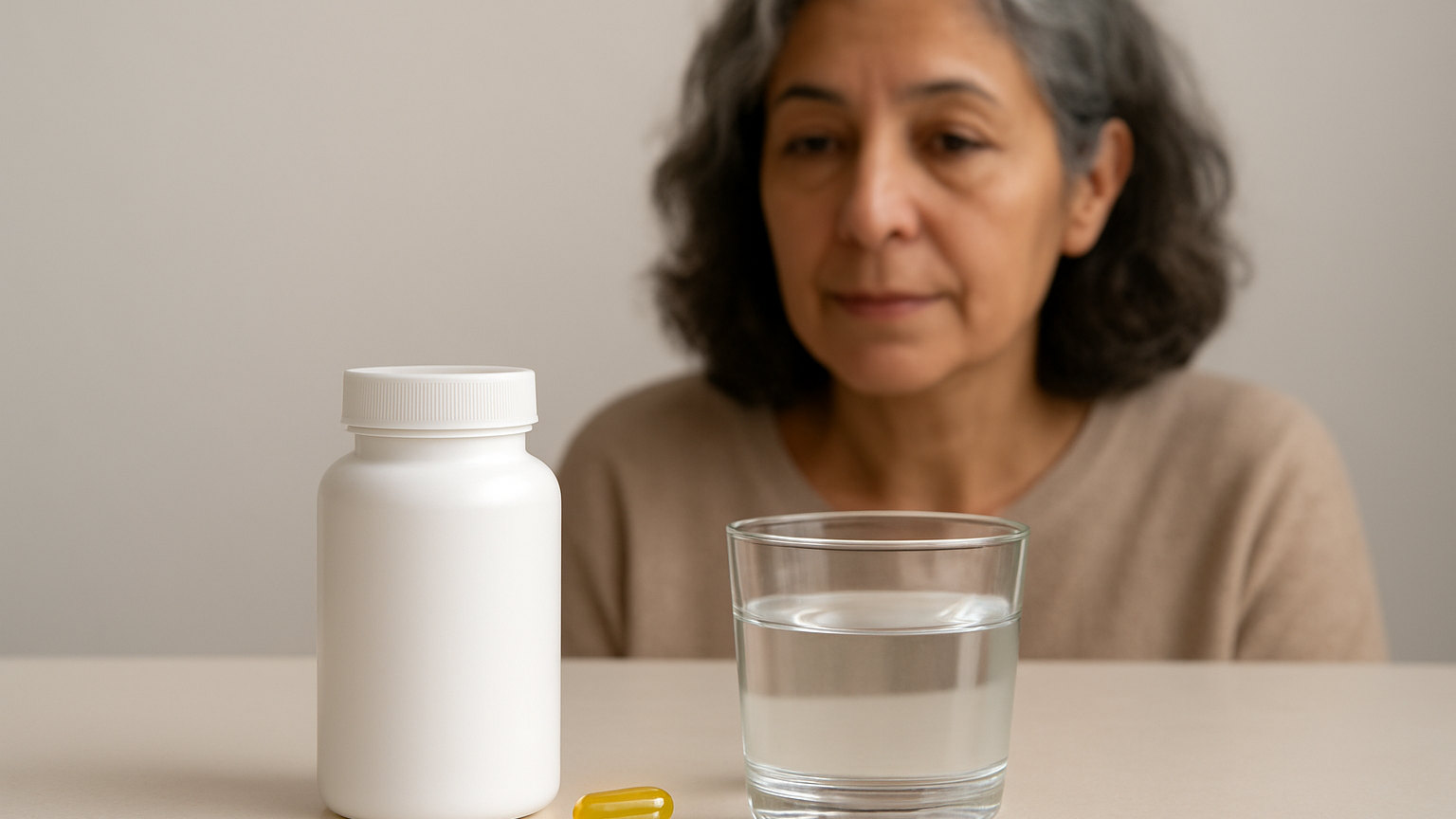
Evening primrose oil is taken for eczema, breast pain and menopausal symptoms. Its UK medicine licences were withdrawn for lack of efficacy.
By Supplements Guide
30 Jan 2026

Most people in the UK do not need most vitamins in a bottle, and a few people badly need one or two. These guides separate the two. Each covers what the vitamin does, who is actually at risk of running short, what the evidence says about taking it when you are not, the dose that has been studied rather than the dose on the tub, and the upper limit worth respecting.
Evening primrose oil is taken for eczema, breast pain and menopausal symptoms. Its UK medicine licences were withdrawn for lack of efficacy.
Absorption depends on bile, pancreatic enzymes and fat forming micelles in the gut. Taking these vitamins on an empty stomach wastes a meaningful proportion of the dose.
UK guidance sets 40mg a day, which is enough to prevent deficiency comfortably. Research doses sit far higher, and the gap between the two explains most supplement labels.
Chasteberry, or vitex, is taken for premenstrual symptoms and cyclical breast pain. It acts on prolactin, which is why it interacts with several medicines.
A shorter list than the shelf implies. Restricted diets, malabsorption, pregnancy and older age account for most of the genuine cases.
For most people eating varied food, a B-complex adds nothing measurable. It earns its place where several shortfalls are plausible at once, which is a narrower situation than the shelf suggests.
Bacopa monnieri is an Ayurvedic herb taken for memory and concentration. It works slowly if at all, and commonly upsets the stomach.
The neural tube closes within the first month, often before a pregnancy is known. Starting folic acid beforehand is what makes it effective, and it substantially reduces the risk of serious birth defects.
Around one in six UK adults has a low vitamin D level by the end of winter. Latitude, weather, indoor work and diet all contribute, and none of them are things you can fix by trying harder.
Schisandra is a traditional Chinese berry taken for stamina, stress and liver health. It affects drug metabolism enough to matter clinically.
B12 is one of the few supplements with a genuinely unavoidable case behind it, and only for particular groups. Vegans, older adults and people on certain medicines head the list.
Bilberry is taken for eye health on the back of a wartime story that turns out to be untrue. Its other uses have slightly better support.