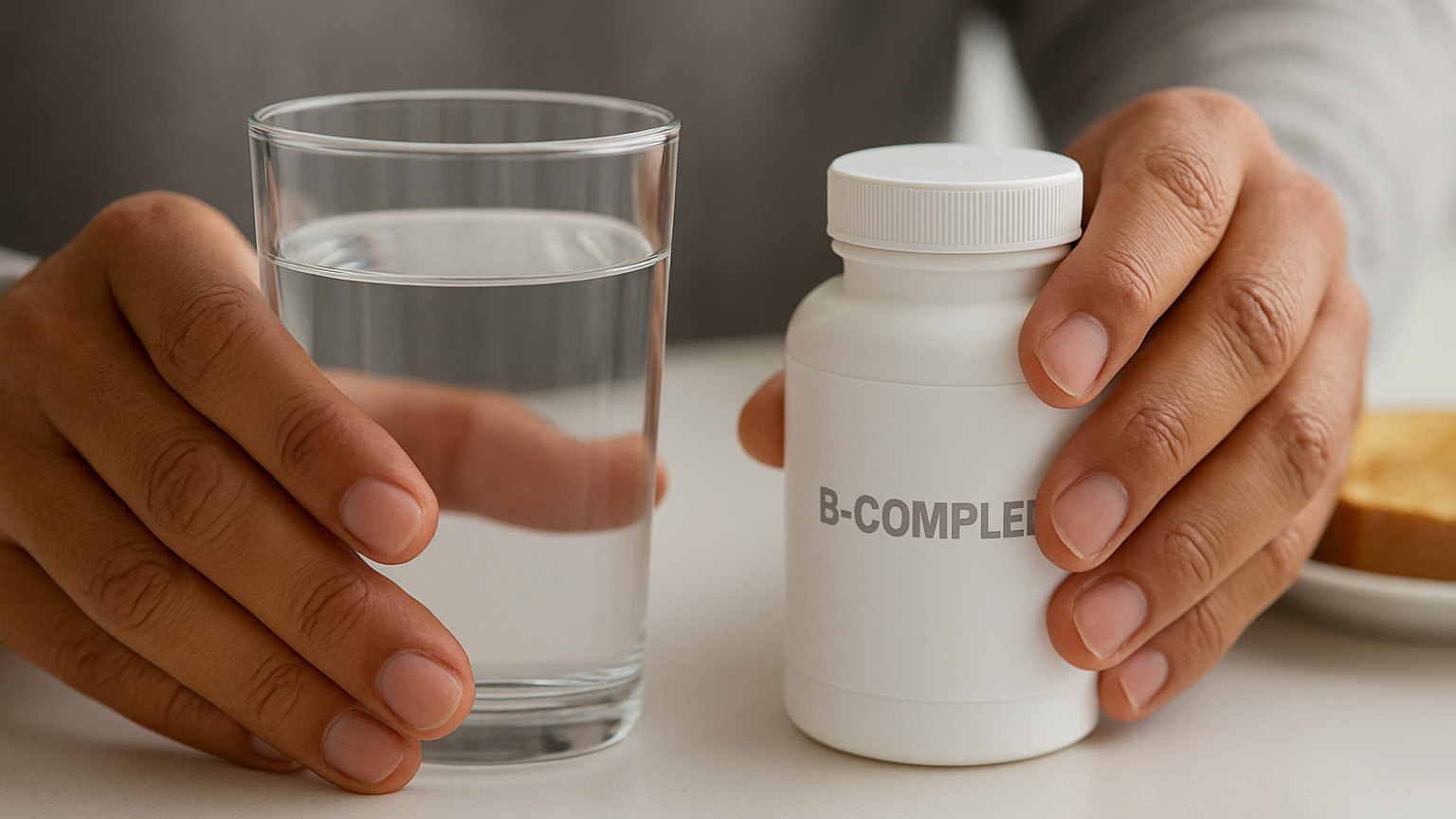
Taking a vitamin D capsule on an empty stomach wastes a meaningful part of the dose. The same applies to vitamins A, E and K. The reason lies in a process that requires fat to be present at the same time, and it is one of the few supplement timing rules with solid evidence behind it.
What actually happens during absorption?
Fat soluble vitamins cannot dissolve in the watery contents of the small intestine, so they cannot simply diffuse across the gut wall.
When fat arrives, the gallbladder releases bile and the pancreas releases lipase. Together these break fat into droplets and package it, along with fat soluble vitamins, into tiny structures called micelles.
Micelles ferry their contents to the intestinal wall, where the vitamins are absorbed and repackaged into chylomicrons. These enter the lymphatic system rather than the bloodstream directly, eventually reaching the liver.
Without fat, none of this machinery is triggered. A proportion of the vitamin passes through unabsorbed.
How much difference does it make?
The best studied example is vitamin D. A frequently cited study asked people already taking vitamin D to start taking it with their largest meal of the day. Blood levels rose substantially over the following months with no change in dose.
Research on vitamin E and on carotenoids has found similar effects, with absorption improving considerably when fat is present. Studies feeding salad with and without fat containing dressing found markedly better carotenoid absorption when fat was included.
The size of the effect varies between studies and between individuals, and the direction is consistent.
How much fat do you need?
Less than most people assume. A few grams is generally sufficient, and there is no need to eat a large or fatty meal.
- Milk or yoghurt with cereal
- Eggs, cheese or butter on toast
- Nuts, seeds or nut butter
- Avocado, oily fish or olive oil on a salad
Softgel capsules suspended in oil provide a small amount of their own, which is one reason they tend to perform slightly better than dry tablets taken alone.
Does this apply to food as well as supplements?
Yes, and it has practical cooking implications. Carotenoids in carrots, sweet potato and leafy greens are absorbed far better when eaten with some fat.
Cooking also helps, by breaking down plant cell walls and releasing the compounds. Lightly cooked carrots with a little oil deliver considerably more usable carotenoid than raw ones eaten alone.
The same principle applies to vitamin K in leafy greens, which is why a salad with an oil based dressing is more than just more palatable.
Who has trouble even with fat present?
Anyone whose fat digestion is impaired. Coeliac disease, Crohns disease, cystic fibrosis and pancreatic insufficiency all reduce absorption of these vitamins.
Liver and gallbladder conditions matter because bile is essential to the process. People who have had their gallbladder removed generally still absorb fat adequately, since bile continues to be produced.
Bariatric surgery frequently causes long term fat soluble vitamin deficiencies, and lifelong supplementation with monitoring is standard afterwards.
Which medicines interfere?
Orlistat, which blocks fat absorption for weight loss, reduces absorption of all four. Guidance generally suggests taking a multivitamin at a different time of day, usually at bedtime.
Cholestyramine and similar bile acid binders also reduce absorption, as do some laxatives used long term.
Anyone taking these should ask a pharmacist about spacing and about whether monitoring is appropriate.
What is the practical advice?
Take vitamins A, D, E and K with a meal, whichever meal suits your routine. Breakfast works well for most people because it is habitual and contains food.
If you take several fat soluble supplements, taking them together at the same meal is fine, and there is no established reason to space them apart.
A supplement taken reliably at breakfast outperforms one taken at a theoretically optimal moment three days a week, which is the practical point underneath all of this.
Consistency matters more than which meal you choose, since stores buffer short gaps. This article is general information and not medical advice.