Does Omega 3 Help Dry Eyes or Skin?
A large trial for dry eye found no benefit over placebo, overturning earlier optimism. The skin evidence is limited and mostly for specific conditions.
By Supplements Guide
19 Aug 2026

EPA and DHA against ALA, what the large heart trials actually found, and how to read the dose on the back rather than the front.
A large trial for dry eye found no benefit over placebo, overturning earlier optimism. The skin evidence is limited and mostly for specific conditions.
Compare on EPA and DHA content rather than capsule size, check for third party testing, and pay attention to freshness. Most products fail on at least one.
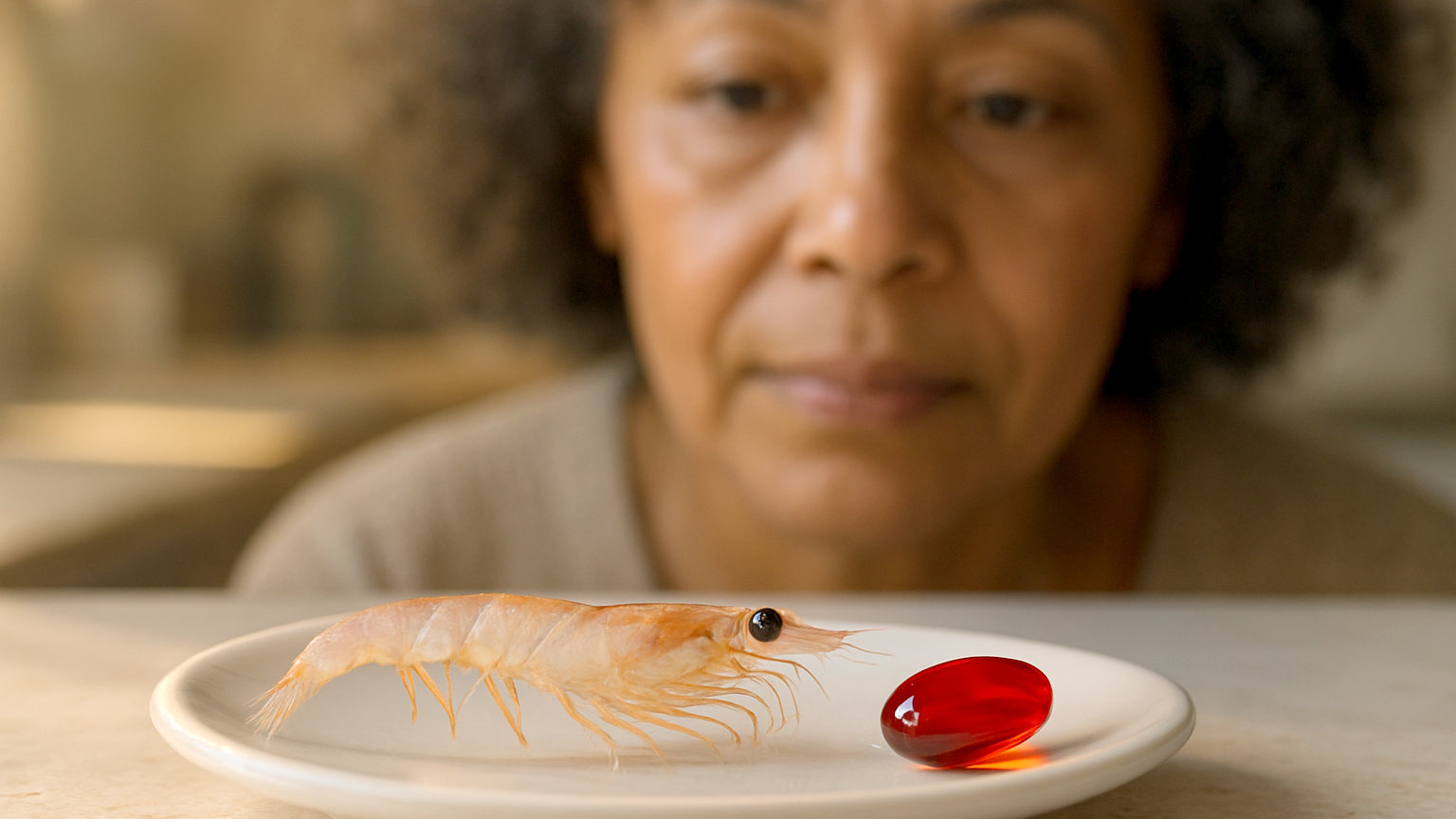
Krill delivers omega 3 in phospholipid form, which may absorb somewhat better. It also supplies far less EPA and DHA per capsule at a much higher price.
They have mild effects on platelet function, and the bleeding risk has been substantially overstated. Surgical guidance has relaxed accordingly.
A widely cited concept with weaker evidence than its popularity suggests. Absolute omega 3 intake appears to matter more than the ratio.
Meta-analyses report modest benefits, with EPA predominant formulations performing better than DHA. It is an adjunct rather than a treatment.
DHA accumulates rapidly in the fetal brain and eye, and guidance recommends oily fish with specific limits. Cod liver oil should be avoided entirely.
Readily. Independent testing has found many products exceeding recommended oxidation limits, and the fishy repeat people complain about is often the sign.
No. Cod liver oil contains vitamins A and D from the liver, which brings a specific caution about retinol that ordinary fish oil does not.
Olive leaf extract is taken for blood pressure, cholesterol and immune support. The blood pressure evidence is the strongest of the three.
Garlic supplements are taken for blood pressure and cholesterol. Blood pressure has the better evidence, with modest reductions in meta-analyses.
There is reasonable evidence in rheumatoid arthritis, including reduced painkiller use. Evidence in osteoarthritis is much weaker.