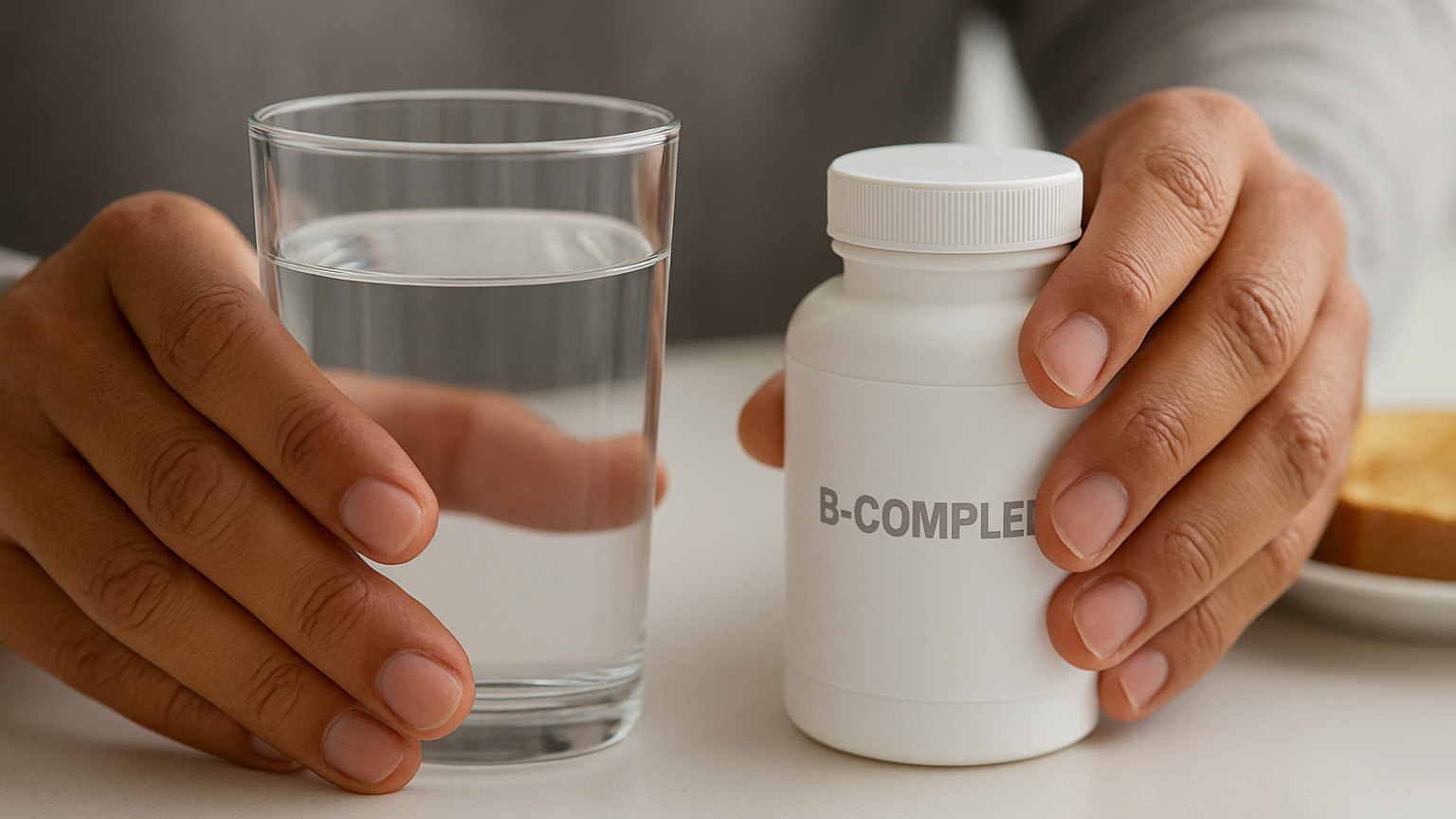
This is one of the few supplement safety issues that has prompted formal warnings from drug regulators, and it remains poorly known among the people taking the supplement. High dose biotin does not harm you directly. It distorts laboratory test results, and some of the affected tests are ones on which urgent decisions are made.
Why does biotin affect tests?
Many laboratory immunoassays use the strong binding between biotin and a protein called streptavidin as part of their chemistry. It is an elegant and widely used system.
When a blood sample contains a large amount of free biotin from a supplement, that biotin competes with the reagents and disrupts the reaction.
The direction of the error depends on the assay design. In competitive assays, typically used for small molecules such as thyroid hormones, results read falsely high. In sandwich assays, used for larger molecules such as troponin and TSH, results read falsely low.
Which tests are affected?
- Thyroid function tests, where the pattern can mimic an overactive thyroid
- Troponin, used to diagnose heart attacks, which can read falsely low
- Hormone tests including cortisol, testosterone, oestradiol and parathyroid hormone
- Vitamin D and vitamin B12 assays
- Some tumour markers and some infectious disease tests
- hCG pregnancy tests in laboratory format
Not every assay is affected, since manufacturers use different platforms and some have been reformulated. You will not generally know which platform your local laboratory uses.
Why is the troponin issue serious?
A falsely low troponin can lead to a heart attack being missed. Someone arriving with chest pain may be reassured and sent home on the basis of a normal result.
Drug regulators including the FDA have issued safety communications on this, reporting cases of incorrect results and at least one death following a missed diagnosis.
If you take biotin and attend hospital with chest pain, say so immediately and clearly. It changes how the result should be interpreted.
How much biotin causes a problem?
Interference is generally reported at doses well above dietary intake, typically from around 5,000 micrograms upwards, though effects have been described at lower amounts with some assays.
Hair, skin and nail supplements commonly contain 5,000 or 10,000 micrograms, hundreds of times any plausible requirement. High dose biotin is also used at far higher doses in some multiple sclerosis research.
Ordinary dietary biotin and the small amounts in a standard multivitamin are not a concern.
How long should you stop before a test?
Guidance commonly suggests stopping at least two days beforehand, and some laboratories advise longer for very high doses.
Biotin clears reasonably quickly in people with normal kidney function, with a half life of a few hours. Kidney impairment prolongs it, so a longer gap is sensible.
If you cannot stop it, or the test is urgent, tell whoever takes the sample. Laboratories can often use an alternative method or interpret the result accordingly.
What can go wrong if nobody knows?
Published cases describe people being investigated or treated for thyroid disease that they did not have, based on results that normalised once biotin was stopped. Some underwent unnecessary imaging or started medication.
Others have had genuine conditions missed because a marker read falsely low. Both errors follow from the same underlying issue.
What should you do?
Include biotin on any list of what you take, and mention it before blood tests. Consider whether you need a high dose at all, given that biotin deficiency is rare and the evidence for hair and nail benefits in people who are not deficient is weak.
If a test result seems inconsistent with how you feel, biotin is worth raising as a possible explanation before further investigation is arranged. Report suspected problems through the MHRA Yellow Card scheme.
The wider lesson applies beyond biotin. Anything you take regularly is part of your medical picture, and laboratories and clinicians can only account for what they are told about.
This article is general information and not medical advice.