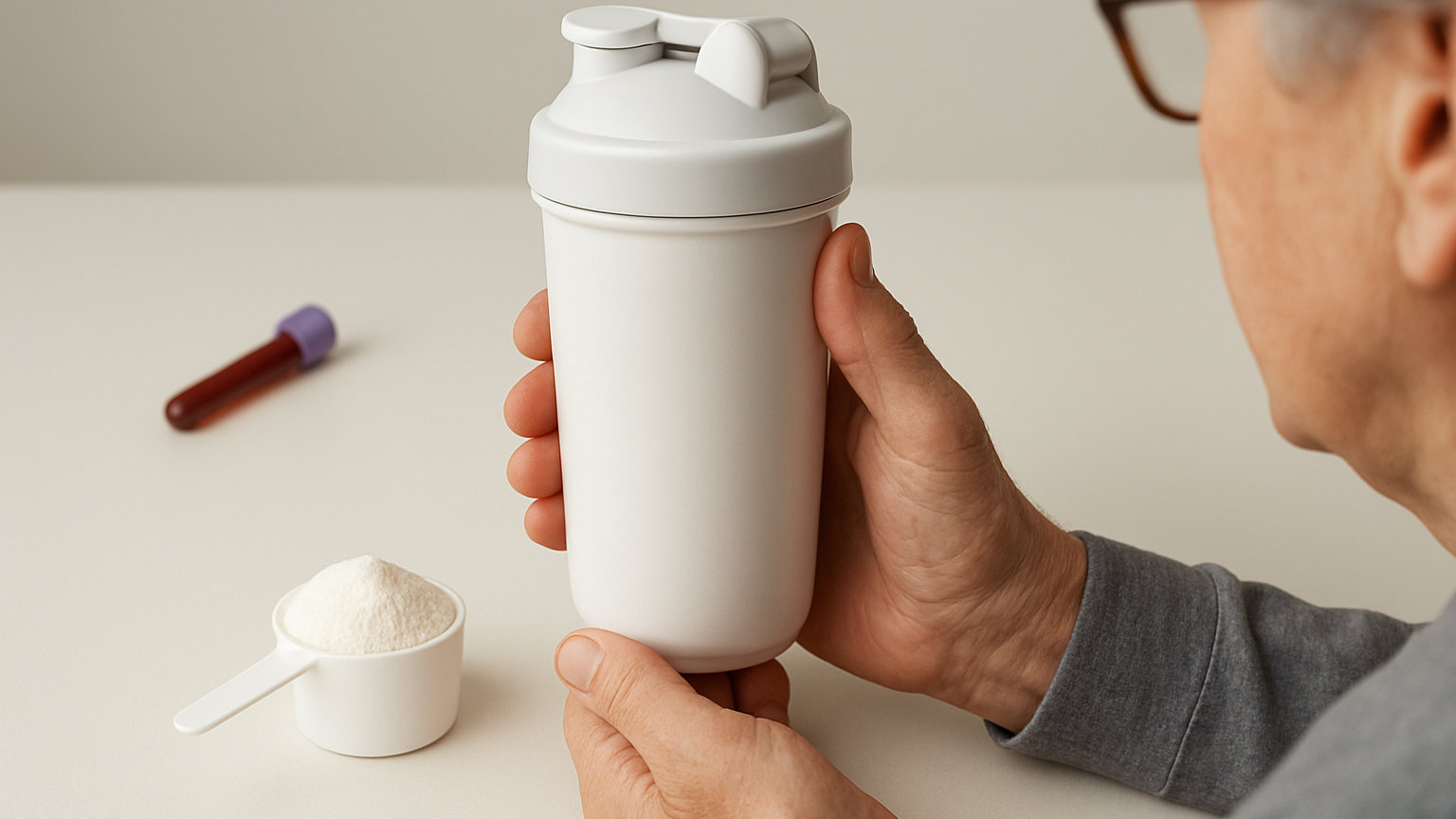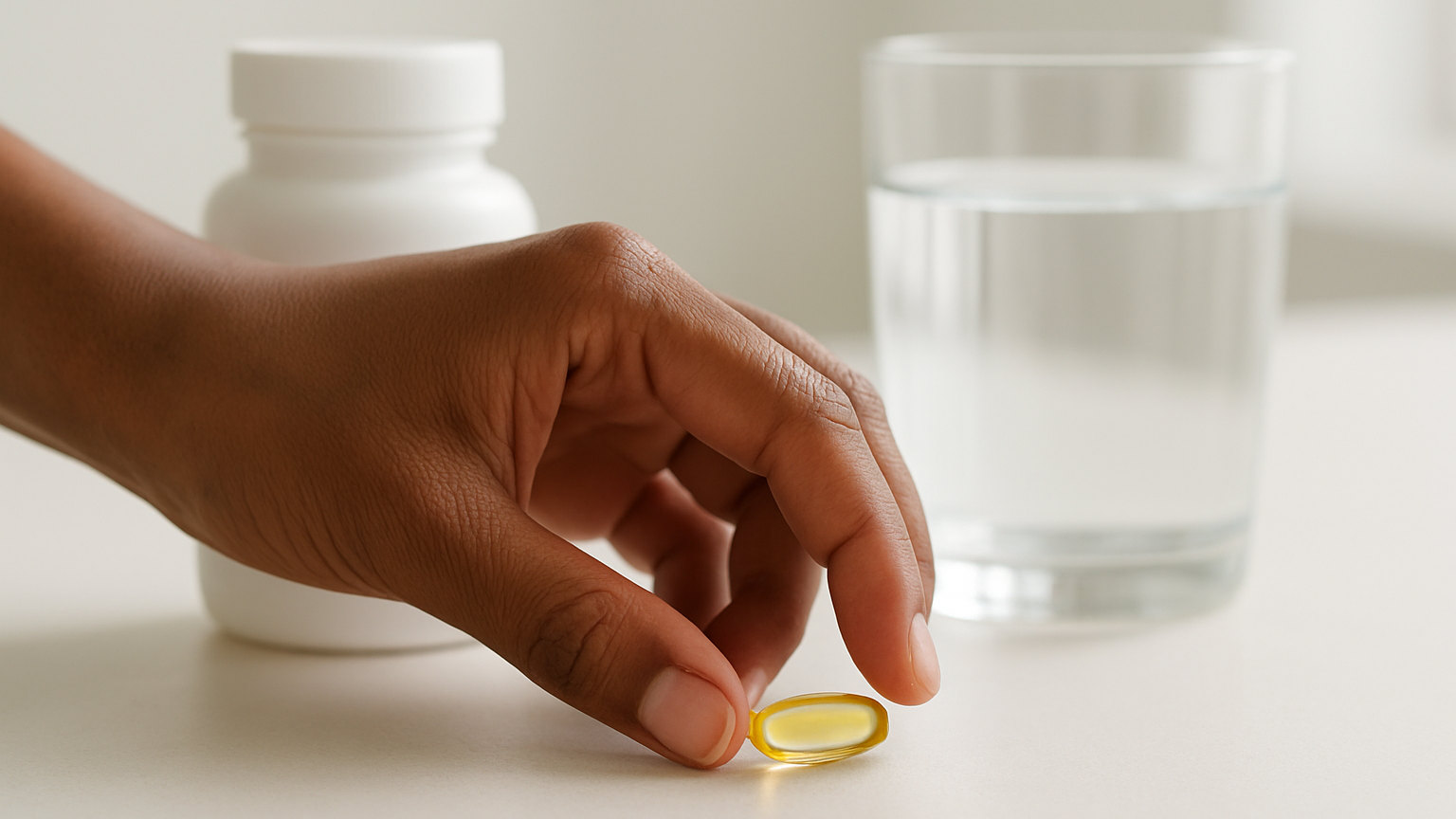
There is no established best time of day to take vitamin D, and anyone telling you otherwise is working from a much thinner evidence base than the confidence suggests. What does have measurable support is taking it alongside food containing some fat, and taking it on a schedule you will actually keep to.
Why does food matter more than the clock?
Vitamin D is fat soluble, meaning it is absorbed through the same route as dietary fat rather than dissolving readily in water. When it arrives in the small intestine without any fat present, a meaningful proportion passes through unabsorbed.
A frequently cited study asked people who had been taking vitamin D with no particular routine to start taking it with their largest meal of the day. Blood levels rose substantially over the following months, with no change to the dose. The exact size of that effect varies between studies, but the direction is consistent.
You do not need a fatty meal, only some fat. Milk in cereal, eggs, cheese, avocado, oily fish, olive oil on a salad or nuts are all sufficient. A softgel capsule suspended in oil provides a little of its own, which is one reason those formats tend to perform slightly better than dry tablets taken on an empty stomach.
Does vitamin D at night affect sleep?
This claim circulates widely and rests on a plausible but unproven chain of reasoning. Vitamin D is produced in response to sunlight, so the argument runs that taking it in the evening might be read by the body as a daylight signal and suppress melatonin.
Direct evidence is limited. There are observational reports associating low vitamin D with poor sleep, some small trials suggesting supplementation improves sleep quality in people who were deficient, and a handful of surveys where individuals reported worse sleep after evening doses.
None of that amounts to a demonstrated mechanism. Circulating vitamin D does not fluctuate on the timescale of hours in the way the theory requires, since the storage form has a half life measured in weeks.
The practical position is straightforward. If you take it at night and sleep well, carry on. If you take it at night and notice a problem, move it to the morning and see whether anything changes, which costs nothing to test.
Is daily better than weekly or monthly?
For the standard 10 microgram intake, daily is the pattern the guidance describes and the one most trials have used. It keeps levels steady rather than producing peaks and troughs.
Larger intermittent doses have been studied, and the results are a cautionary tale. Trials giving very high annual or monthly doses to older adults have in some cases found more falls and fractures in the supplemented group, which is the opposite of the intended effect. Reviews of vitamin D and respiratory infection have likewise found the benefit concentrated in daily or weekly dosing rather than large bolus doses.
Weekly dosing of a moderate amount is a reasonable compromise for people who genuinely cannot manage a daily routine, and it is sometimes how prescribed treatment courses are given. Very large single doses are a medical decision rather than a self care one.
Does it matter what else you take at the same time?
Vitamin D is not a fussy neighbour. It can be taken with a multivitamin, with calcium, with magnesium or with omega-3 without any established problem, and the oil in a fish oil capsule provides fat that assists absorption.
The main timing conflicts involve medicines rather than other supplements. Weight loss drugs that reduce fat absorption, some cholesterol binding treatments and certain anticonvulsants all affect vitamin D status or absorption, and anyone taking those should ask a pharmacist about spacing and dose.
What actually makes the difference?
Consistency, by a wide margin. Because the storage form persists for weeks, a missed day changes almost nothing, but a pattern of remembering it twice a week changes a great deal.
Attach it to something you already do without thinking. Breakfast is the usual answer, partly because it is habitual and partly because it is a meal, which handles the fat question at the same time.
If you forget a dose, take it when you remember and continue as normal rather than doubling up. This article is general information and not medical advice, and a pharmacist can check your specific medicines free of charge.