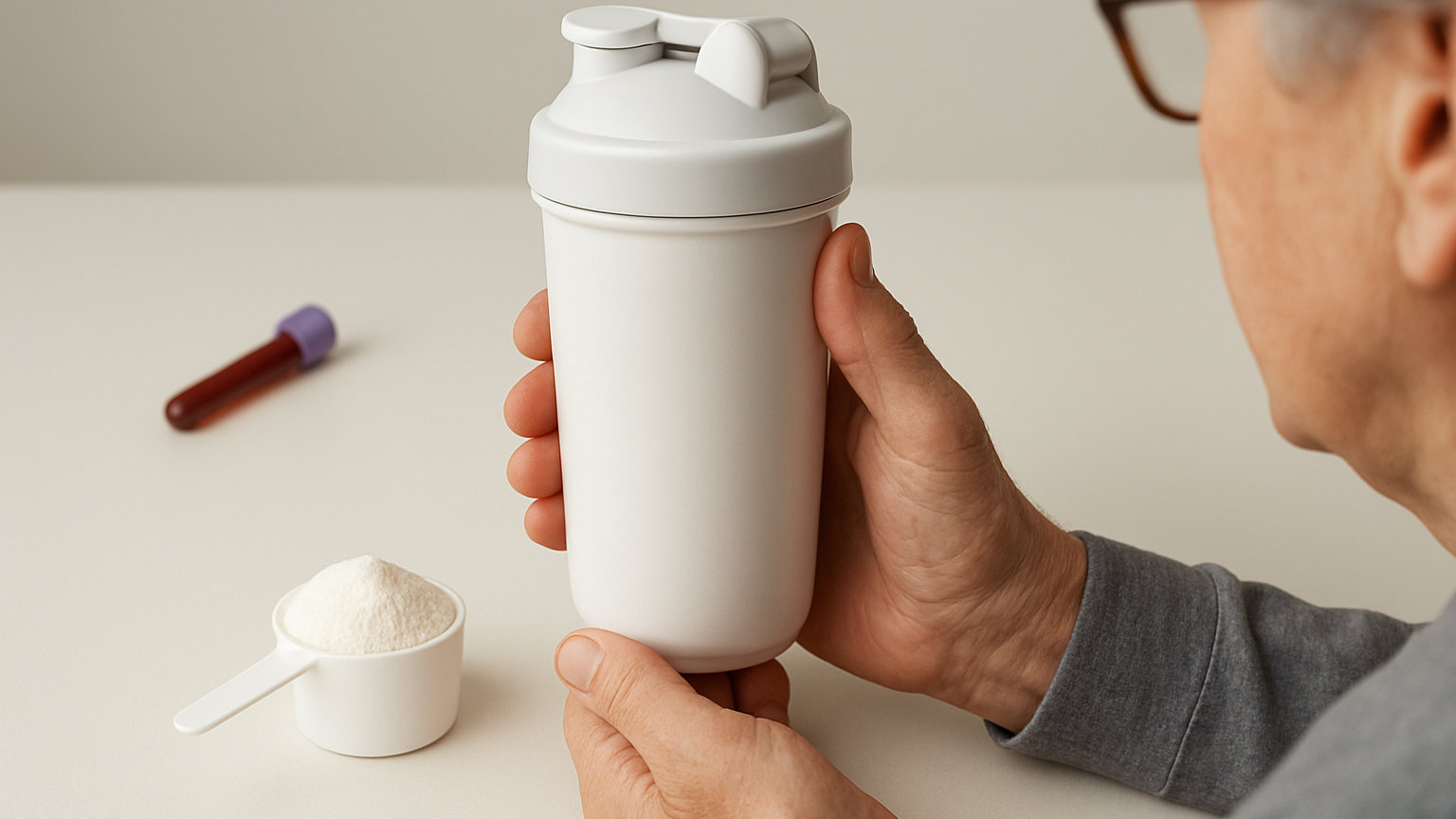
On a steady daily dose, blood vitamin D rises over a period of weeks and reaches a plateau at roughly two to three months. That plateau is the point at which the amount going in matches the amount being used and cleared. Anyone expecting to feel a difference within days has been sold an unrealistic timeline.
What is actually happening over those weeks?
Vitamin D from a capsule is absorbed with dietary fat, converted by the liver into 25-hydroxyvitamin D, and stored. That storage form has a half life of roughly two to three weeks, meaning half of any given amount is cleared over that period.
Reaching a stable level takes approximately four to five half lives, which lands at eight to twelve weeks. This is why testing shortly after starting a supplement produces a misleadingly low result and why repeat testing is usually advised at around three months.
The same arithmetic works in reverse. Stopping a supplement does not empty your stores overnight, and levels decline gradually over a couple of months rather than falling off a cliff.
Why does the timeline differ between people?
- Starting level, since someone severely deficient has further to travel
- Body weight, because vitamin D distributes into fat tissue and dilutes across a larger volume
- Dose, with higher intakes reaching a plateau at a higher point rather than a faster one
- Whether it is taken with food containing fat, which affects how much is absorbed at all
- Gut conditions such as coeliac disease or Crohns disease, which reduce fat absorption
- Certain medicines, including some anticonvulsants and fat blocking weight loss drugs
Age plays a part too. Older skin makes vitamin D less efficiently, though that affects sunlight production rather than how a supplement is handled.
When would you notice a symptom change?
This depends entirely on whether deficiency was causing the symptom in the first place, and for most people it was not.
In confirmed osteomalacia, where deficiency has softened bone, treatment produces improvement in bone pain and muscle weakness over weeks to months rather than days. Recovery is gradual and follows the correction of the underlying mineralisation problem.
If your level was already adequate, there is no reason to expect anything to change. Large trials of vitamin D for mood, fatigue, infection and cardiovascular outcomes in people who were not deficient have generally found little to nothing. A supplement that fills a gap you do not have has nothing to fill.
That is worth saying clearly, because the gap between expectation and reality is where people conclude they need a much larger dose, which is the point at which the risks start to matter.
Does a bigger dose work faster?
A higher dose raises the plateau rather than shortening the journey, and the return diminishes sharply as the dose climbs. Going from 10 to 25 micrograms changes the endpoint noticeably. Going from 25 to 100 changes it far less than the tenfold jump in dose suggests.
Very large single or monthly doses do raise levels quickly, and the trials using them have been unimpressive and occasionally concerning, with some finding increased falls and fractures in older adults. Rapid correction is a clinical decision for confirmed severe deficiency, not a shortcut worth taking on your own.
The safe upper level for adults is generally given as 100 micrograms a day from all sources. Sustained intakes above that can raise blood calcium enough to affect the kidneys and heart rhythm.
When should you test, and when should you not?
If a GP has confirmed deficiency and started treatment, a repeat test at around three months shows whether the dose is doing its job. Testing sooner mostly measures how long you have been taking it.
Most people following the standard 10 microgram advice do not need testing at all. It becomes worthwhile with symptoms suggesting deficiency, with an absorption condition, or when considering a dose well above the guidance.
If you have been supplementing for three months and still feel unwell, that is a reason to see a GP and look for another explanation rather than to increase the dose. This article is general information and not medical advice.