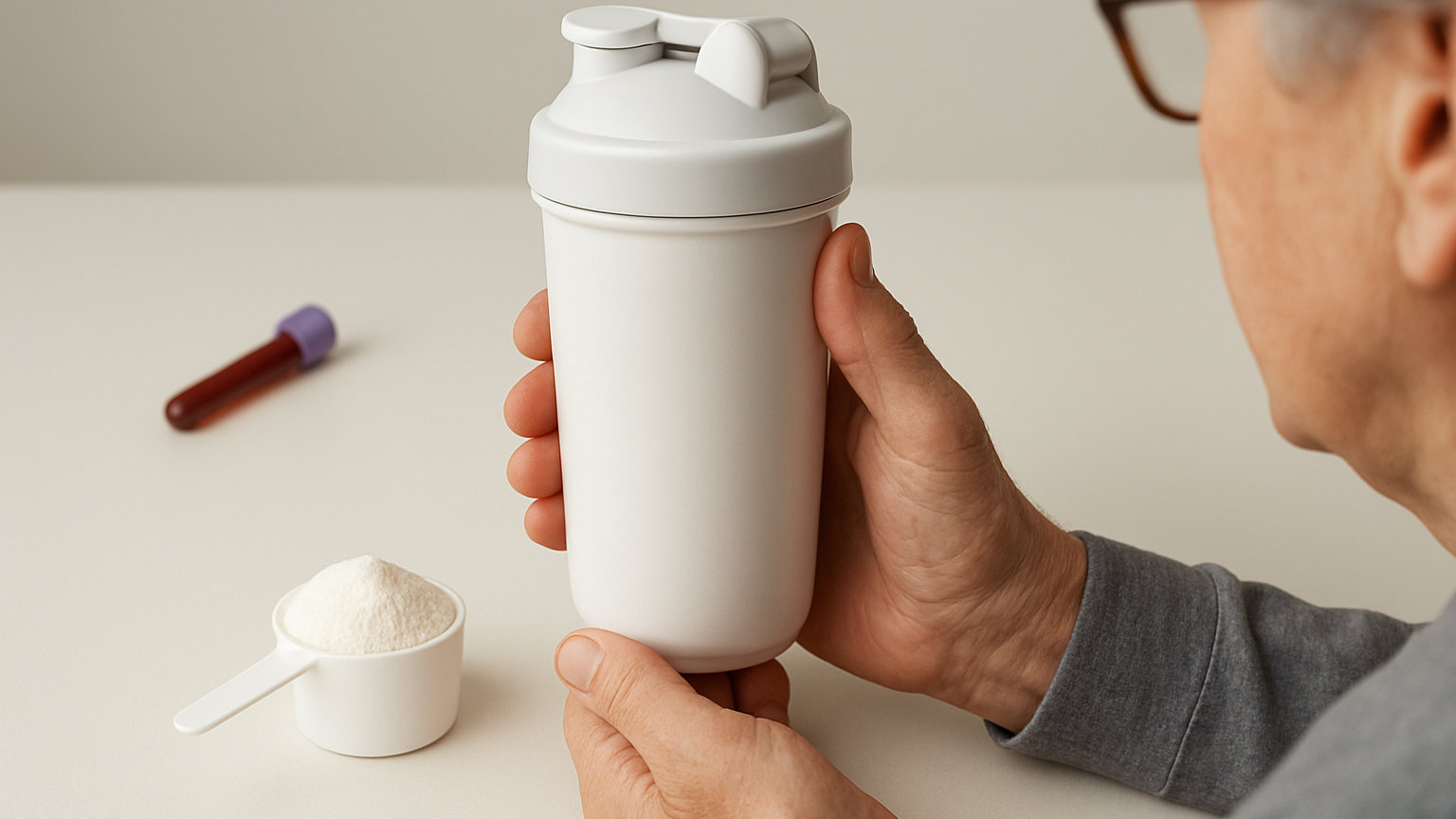
The useful answer is with food, at whatever time of day you will consistently remember. There is no evidence that morning beats evening for a multivitamin, and there are good reasons to take it with a meal rather than on an empty stomach.
Why does food matter?
Multivitamins contain vitamins A, D, E and K, all of which are fat soluble. They need dietary fat present to be packaged for absorption, and taking them without any means a proportion passes through unabsorbed.
Studies on vitamin D specifically have found that taking it with the largest meal of the day raises blood levels substantially compared with taking it without particular attention to food.
The amount of fat needed is small. Milk on cereal, eggs, cheese, nuts or oil on a salad is sufficient.
Does it reduce nausea?
Yes, and this is a practical reason many people give up on multivitamins. Iron and zinc in particular cause stomach upset on an empty stomach, and B vitamins at higher doses can cause queasiness.
Taking it mid meal rather than before or after generally works best for anyone who has had trouble.
Should you split the dose?
Some products require two or three tablets daily, and splitting them across meals has a rationale. Several water soluble vitamins have saturable absorption, so smaller amounts more often absorb somewhat better.
Splitting also reduces competition between minerals, since calcium, iron, zinc and magnesium compete for the same absorption pathways.
Against that, more doses means more chances to forget. If a single daily tablet is what you will actually take, that is the better option.
Does it affect sleep?
There is little evidence that multivitamins disturb sleep. B vitamins are not stimulants and have no direct alerting effect.
Some people report vivid dreams with B6 taken in the evening, and the evidence for this is thin. If you take one at night and sleep well, there is no reason to change.
Watch for combination products, since some energy formulations contain caffeine.
When does spacing from medicines matter?
- Levothyroxine should be taken well away from calcium and iron, usually four hours
- Tetracycline and quinolone antibiotics bind to minerals and need spacing
- Bisphosphonates for osteoporosis require an empty stomach and separation from minerals
- Orlistat blocks fat absorption, so a multivitamin is usually taken at bedtime instead
These are genuine interactions where timing changes whether the medicine works. A pharmacist can advise on your specific combination.
Does it matter before blood tests?
Sometimes, and it is underappreciated. Biotin in a multivitamin can interfere with laboratory immunoassays including thyroid and troponin tests, and stopping at least two days beforehand is commonly advised.
B12 supplementation also normalises serum B12 quickly, which makes deficiency hard to identify afterwards. Mention supplements before any blood test.
What if you miss a dose?
Take it when you remember or skip it and continue as normal. Do not double up, particularly with products containing vitamin A or iron.
Missing occasional days matters very little, since fat soluble vitamins are stored and the water soluble ones are needed regularly rather than urgently.
What actually matters most?
Consistency. Attach it to a meal you eat reliably, which handles the fat and the memory question together. Breakfast works for most people because it is habitual.
This article is general information and not medical advice.
Does it matter if you take it with tea or coffee?
It can. Tannins in tea and coffee substantially reduce absorption of non haem iron, so a multivitamin containing iron taken with a morning cup delivers less than it would otherwise.
Moving the tea or coffee an hour away from the supplement is a small change with a measurable effect for anyone relying on that iron.
Should you take it every day?
Daily is the usual pattern and there is nothing critical about it. Fat soluble vitamins are stored, so short gaps are buffered, and the water soluble ones are simply needed regularly.
Some people take one every other day to reduce cost, which is a reasonable approach for general cover though not for correcting an identified deficiency.