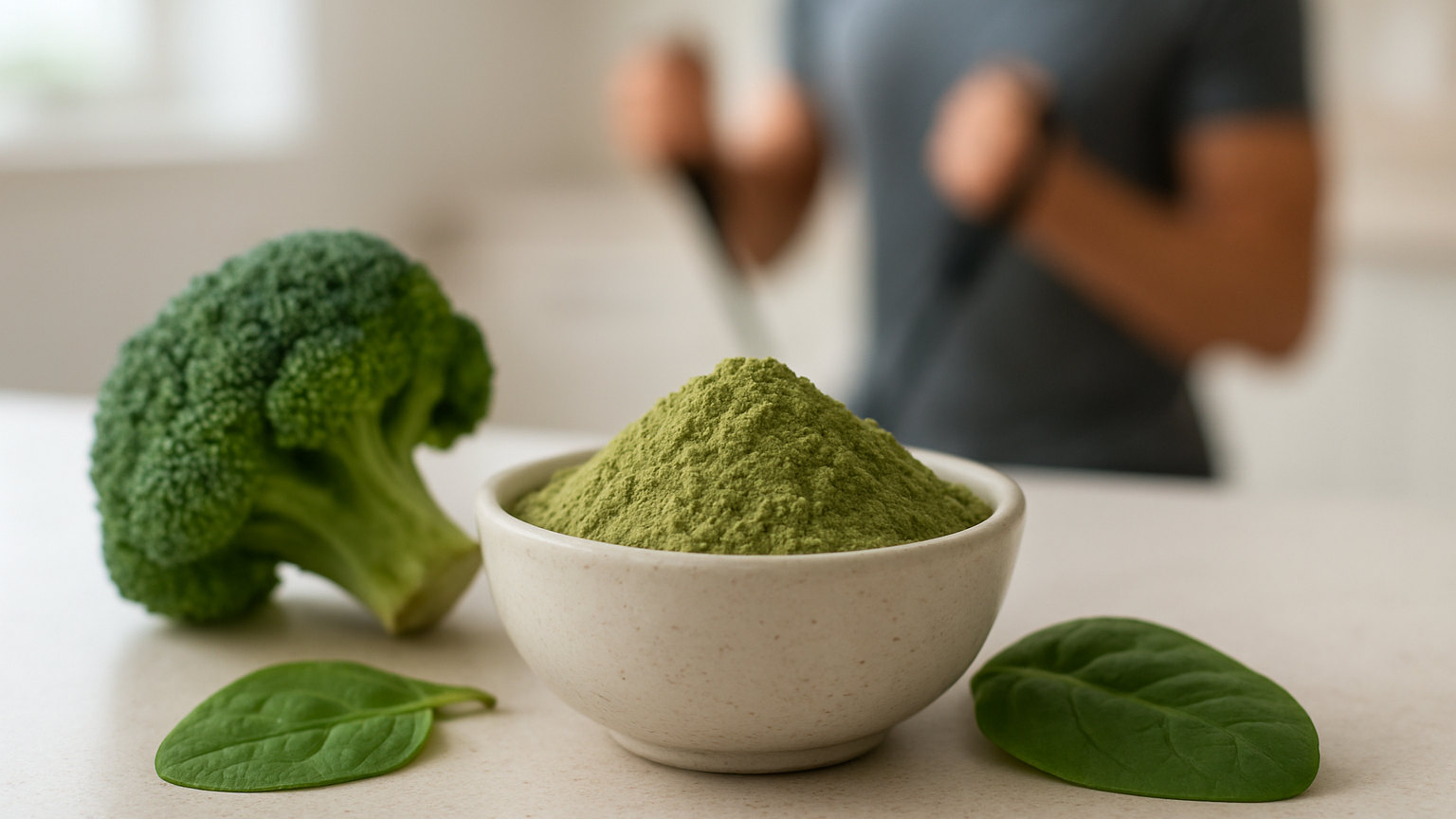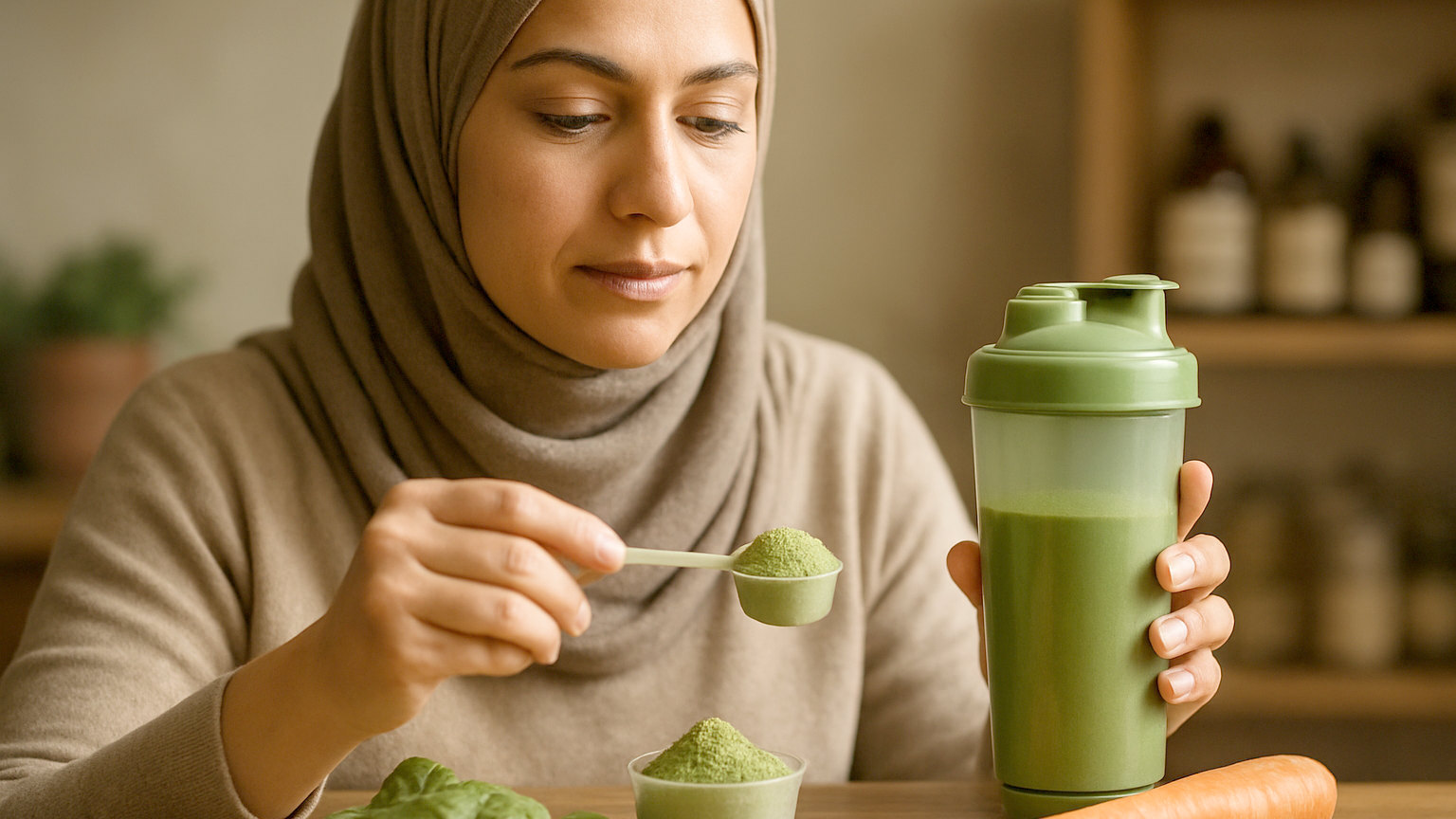
The central promise of greens powders is that they substitute for vegetables you are not eating. It is worth working through what that would actually require.
How much vegetable is in a scoop?
A portion of vegetables is around 80 grams fresh, which is mostly water. Dried, that reduces to a fraction of its weight.
By dry weight, a ten gram scoop might roughly correspond to one portion of vegetables if it contained nothing else.
It contains thirty to seventy other things, so the vegetable equivalent per serving is considerably less than one portion.
What is missing?
- Fibre, at one to two grams per serving against 30 grams daily recommended
- Volume and water, which contribute to satiety
- The intact food matrix, which affects how nutrients are absorbed
- Heat sensitive nutrients including vitamin C and folate, reduced by processing
- The habit and behaviour of eating vegetables
Why does the food matrix matter?
Nutrients in whole foods are embedded in cell structures that affect how and where they are released and absorbed.
Research comparing whole foods with isolated components has repeatedly found the whole food performing differently, sometimes better.
Fibre in particular does more than provide bulk, feeding gut bacteria and producing short chain fatty acids in the colon.
Does processing reduce the nutrients?
Drying and milling degrade some nutrients, particularly vitamin C and folate, which are heat and light sensitive.
This is one reason many products add synthetic vitamins, effectively replacing what processing removed.
Do they count towards five a day?
UK guidance does not count powdered supplements towards the five a day recommendation.
Juice and smoothies count as a maximum of one portion regardless of quantity, reflecting the same reasoning about fibre and sugar.
What are they useful for?
As a supplement to a diet rather than a replacement for one. Someone travelling, unwell or in a period where cooking is difficult may find one useful.
Framing them that way is more honest than presenting them as vegetables in a jar.
What is the summary?
They do not replace vegetables and were never realistically going to. The fibre and volume alone make the substitution impossible.
This article is general information and not medical advice.
What about smoothies?
Blending retains the fibre that juicing removes, which makes a smoothie closer to whole fruit than juice is.
UK guidance still counts smoothies as a maximum of one portion daily, reflecting concerns about sugar release and the ease of consuming large quantities.
Do they help if you eat none?
They supply something rather than nothing, which is a low bar and a genuine one.
The more effective response is to eat some vegetables, since frozen options are cheap, quick and count towards the recommendation.
What about variety?
Eating a range of plants is associated with a more diverse gut microbiome, and a powder does technically supply many species.
Whether trace quantities of forty dried plants produce the same effect as eating varied whole foods has not been demonstrated.
What is the summary?
They do not replace vegetables, and the fibre and volume alone make the substitution impossible regardless of how the nutrients compare.
They are supplements to a diet rather than a replacement for part of one.
Does chewing matter?
Eating produces satiety signals through chewing, stomach distension and the time a meal takes, none of which a drink replicates.
This is one reason liquid calories are less filling than the equivalent food, and it applies to greens drinks as much as to smoothies.
Does anything survive the drying?
Minerals, fibre and heat stable compounds largely do. Vitamin C, folate and some polyphenols degrade to varying degrees.
This is why fortification is common, effectively adding back what processing removed.
Anyone who wants the nutrients without the cooking would get more from frozen vegetables heated in a microwave for three minutes.
Tinned pulses and frozen vegetables between them cover most of the practical objections people raise about eating more plants.