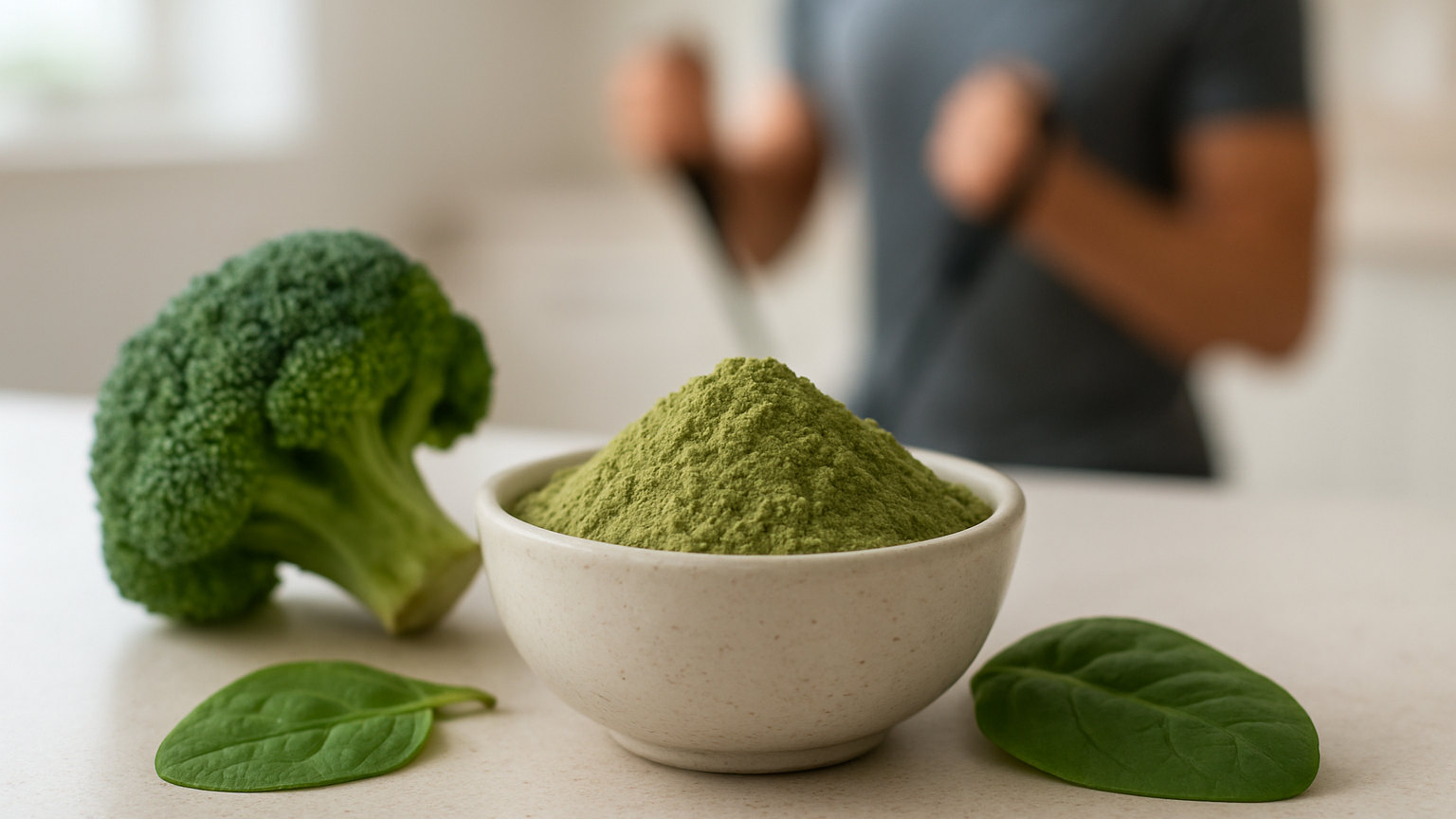
Independent testing programmes have repeatedly found detectable heavy metals in greens powders, and the mechanism is straightforward enough to expect it.
Why does it happen?
Plants absorb metals from soil alongside nutrients. Lead, cadmium and arsenic occur naturally in soil and are also deposited through industrial activity.
Drying concentrates everything by removing water, so a gram of dried powder contains the metals from perhaps ten grams of fresh plant material.
Some plants accumulate more than others, with leafy greens, rice derived ingredients, cacao and seaweed among the higher accumulators.
What has testing found?
Analyses of greens powders have reported detectable lead and cadmium in a substantial proportion of products tested.
Levels have generally been low in absolute terms, often within regulatory limits for food, though some testing organisations apply stricter thresholds.
Does it matter?
This is where interpretation diverges. There is no established safe level for lead exposure, and effects accumulate over time.
Against that, heavy metals are present throughout the food supply, and a greens powder is one contributor among many.
The relevant consideration is that these products are taken daily for years, which makes cumulative exposure more relevant than a single serving.
Who should be most careful?
- Pregnant women, since lead crosses the placenta
- Children and adolescents, who are more vulnerable to lead
- Anyone with kidney disease, where cadmium accumulation is more concerning
- People taking multiple plant based supplements daily
How can you reduce exposure?
Choose products with third party testing that publish results. Avoid products containing rice derived ingredients, which accumulate arsenic.
Consider whether daily use is necessary or whether occasional use would serve the same purpose.
Eating actual vegetables involves the same metals at far lower concentrations, since the water has not been removed.
How is it regulated?
Supplements are regulated as food in the UK, so contaminant limits apply, and there is no pre-market testing requirement for individual products.
Enforcement is reactive, which places more weight on manufacturer quality systems and third party certification.
What is the summary?
A predictable consequence of concentrating dried plants, found repeatedly in testing, and a reasonable argument for tested products and for eating vegetables instead.
This article is general information and not medical advice.
Does washing or processing help?
No. Heavy metals are taken up into plant tissue rather than sitting on the surface, so they cannot be washed off.
Growing location and species selection are what determine content, which is why sourcing matters.
What do the certification programmes cover?
Programmes vary, with some testing for heavy metals specifically and others focusing on banned substances for athletes.
Checking what a certification actually covers is worth doing rather than assuming any mark addresses contamination.
What is the summary?
A predictable consequence of concentrating dried plants, found repeatedly in independent testing, and a reasonable argument for tested products and for eating vegetables instead.
How does it compare with food?
Eating the equivalent vegetables involves the same metals at much lower concentrations, since the water has not been removed.
The concentration step is what makes powders different from the plants they came from.
Should this stop you?
It is a reasonable factor among several rather than a decisive objection, particularly for occasional use.
For daily use over years by a pregnant woman or a child, it carries more weight.
What is a proportionate response?
Choose tested products, avoid rice derived ingredients, and consider whether daily lifelong use is necessary for what these products deliver.
Neither alarm nor dismissal fits the findings well.
What about children?
Greens powders are not recommended for children, and lead exposure in particular is more consequential during development.
Vegetables, offered repeatedly and patiently, remain the approach with no downside.
Should you test yourself?
Blood lead testing is available and not generally indicated for someone taking a supplement occasionally.
Choosing tested products addresses the question more practically than testing yourself afterwards would.