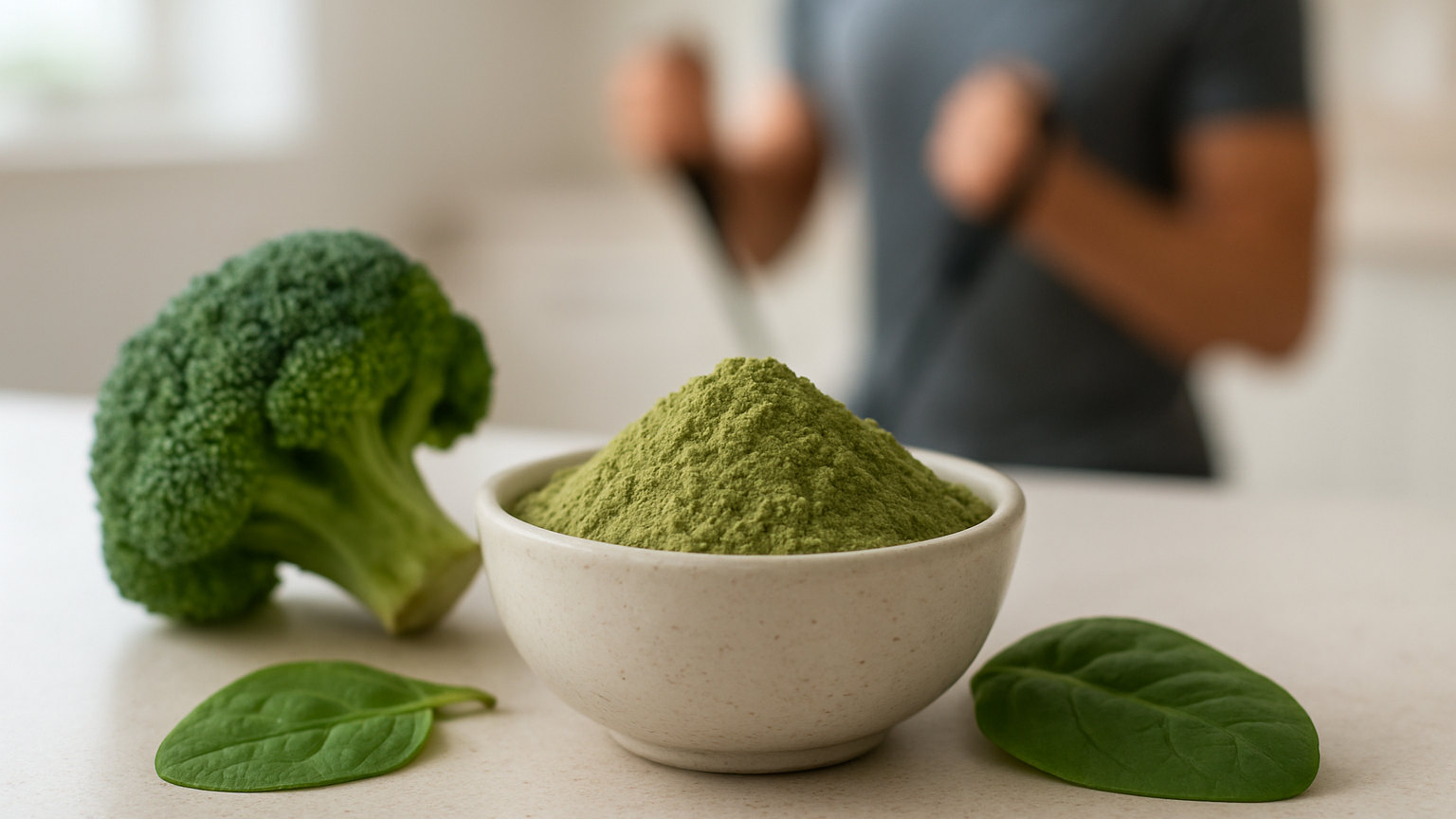
Greens powders are perceived as food rather than as supplements with pharmacological content. Several of their ingredients interact meaningfully with common medicines.
What is the vitamin K issue?
Green leafy plants are high in vitamin K, and dried powders concentrate it substantially.
Warfarin works by interfering with vitamin K dependent clotting factors, so changes in vitamin K intake alter how well it works.
Starting or stopping a greens powder can therefore destabilise anticoagulation, which is a genuine clinical concern rather than a theoretical one.
Does that mean avoiding it entirely?
Not necessarily. Anticoagulation guidance generally emphasises consistency of vitamin K intake rather than avoidance.
Anyone on warfarin should discuss it with their anticoagulation service before starting, and expect more frequent monitoring initially.
Direct oral anticoagulants such as apixaban are not affected by vitamin K in the same way.
What about iodine?
Some greens powders contain kelp or other seaweed, which can supply very large and variable amounts of iodine.
Excess iodine can cause both underactive and overactive thyroid function, and it is a particular concern for anyone with existing thyroid disease.
Checking whether a product contains seaweed is worth doing for this reason alone.
What other ingredients matter?
- Green tea extract, supplying caffeine and interacting with some medicines
- Adaptogens including ashwagandha, with their own interaction profiles
- Potassium rich ingredients, relevant for anyone on ACE inhibitors or with kidney disease
- Fibre, which can affect absorption of medicines taken at the same time
- Probiotics, relevant for anyone immunocompromised
- Various herbal extracts with limited interaction data
Why is this often overlooked?
Because people do not think of a greens powder as a supplement with active ingredients, and frequently omit it when listing what they take.
The long ingredient list also makes it difficult for a clinician to assess quickly without seeing the packet.
What should you do?
Take the packet or a photograph of the ingredient list to a pharmacist, who can check it against your medicines.
Include it on any list of what you take, particularly before surgery or blood tests.
What is the summary?
Genuine interactions exist, with vitamin K and warfarin the most important. These are supplements rather than food, and worth declaring as such.
This article is general information and not medical advice.
What about people on multiple medicines?
The more medicines you take, the higher the chance that something in a forty ingredient blend interacts with one of them.
Older adults on several prescriptions have the strongest reason to have the list checked before starting.
Does timing help?
Spacing supplements a couple of hours from medicines reduces absorption related interactions, though it does nothing for vitamin K or iodine effects.
Those depend on total intake rather than on timing.
What is the summary?
Genuine interactions exist, with vitamin K and warfarin the most important. These are supplements rather than food, and worth declaring as such to anyone managing your care.
Which ingredient causes most problems?
Vitamin K from leafy greens, because warfarin is widely prescribed and the interaction is clinically meaningful rather than theoretical.
Iodine from seaweed is second, particularly for anyone with thyroid disease.
What about supplements generally?
Around half of people taking prescribed medicines also take supplements, and many do not mention them at appointments.
Bringing everything to a medication review is the simplest way to identify problems before they arise.
What is the practical step?
Photograph the ingredient list and show it to a pharmacist, which takes a few minutes and covers every ingredient at once.
What about before surgery?
Supplements are generally stopped one to two weeks beforehand, and greens powders should be included in what you declare.
Vitamin K content is specifically relevant where bleeding and clotting are concerned.
Does it affect blood tests?
Vitamin K affects clotting measurements, and biotin in some formulations interferes with several laboratory assays including thyroid tests.
Mentioning what you take before blood tests prevents confusing results.