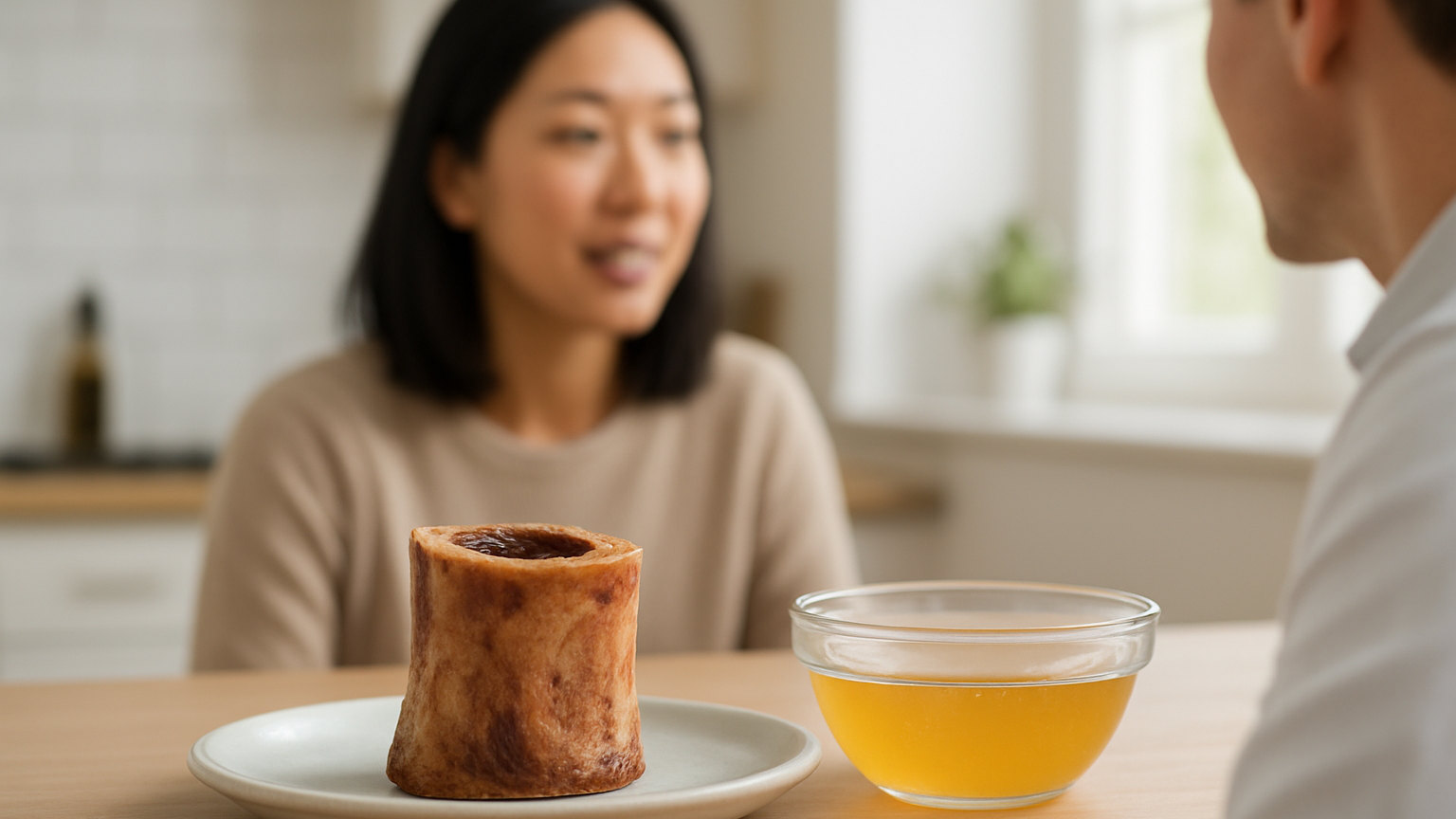
Bone broth is often presented as the traditional way to consume collagen. It does contain collagen derived material, in quantities that are unpredictable and generally modest.
What does simmering bones produce?
Prolonged simmering breaks collagen down into gelatin, which dissolves into the liquid and causes it to set when cooled.
Gelatin is partially hydrolysed collagen, so it is chemically related to what supplements supply.
How much ends up in the broth depends on the bones, the ratio to water, the cooking time and the temperature, none of which is standardised.
How much protein does it contain?
Analyses of homemade and commercial bone broths have found highly variable protein content, frequently in the region of a few grams per cup and sometimes considerably less.
That compares with 2.5 to 10 grams of hydrolysed collagen in studies showing effects.
Some commercial broths contain very little protein, essentially functioning as flavoured stock.
How does gelatin compare with peptides?
Gelatin is less broken down than hydrolysed collagen peptides, so it is absorbed more slowly and less completely.
Research examining the specific peptides that appear in blood has generally used hydrolysed products rather than gelatin.
The tendon research is an exception, having used gelatin with vitamin C.
Are there other concerns?
Some analyses have found detectable lead in bone broth, since lead accumulates in bone and can leach during prolonged cooking.
Levels found have generally been low, and it is a reason for moderation rather than avoidance.
Does it have other value?
- It is a low cost way to use bones that would otherwise be discarded
- It supplies fluid, electrolytes and some minerals
- It is a useful base for soups and stews, increasing vegetable intake
- Many people find it comforting and easy to digest when unwell
These are reasonable merits that do not depend on the collagen claims.
Would you get more from a supplement?
Considerably more predictably. A measured scoop delivers a known dose, while a cup of broth delivers an unknown one.
Anyone specifically pursuing the collagen research should use a hydrolysed product at a studied dose.
What is the summary?
Real gelatin content in unpredictable and generally modest amounts. A good food with genuine merits, and a poor way to reach a research dose.
This article is general information and not medical advice.
Does commercial broth differ from homemade?
Considerably, and in both directions. Some commercial products are concentrated and state protein content, while others are essentially seasoned stock.
Checking the nutrition panel for protein per serving is the only way to know what you are buying.
What about collagen in ordinary cooking?
Slow cooked cuts, oxtail, skin-on chicken and dishes set with gelatin all supply collagen derived material as part of ordinary eating.
These are worth including for culinary reasons without needing to be framed as a supplement strategy.
What is the summary?
Real gelatin content in unpredictable and usually modest amounts. A worthwhile food, and a poor route to a research dose.
Is it worth making?
If you enjoy cooking with it and would otherwise discard the bones, yes. As a deliberate collagen strategy, a measured supplement is more reliable.
Adding a splash of vinegar during cooking is often suggested to aid extraction, with limited evidence that it matters much.
What about mineral content?
Bone broth is often credited with supplying calcium and magnesium, and analyses have generally found modest amounts relative to daily requirements.
It is a contributor rather than a significant source of either.
How long should you simmer it?
Recipes vary from a few hours to over a day, with longer cooking extracting more gelatin and also more of anything else present in the bones.
There is no established optimum, which is part of why the protein content varies so much between batches.
What about ready made products?
Refrigerated and frozen broths from butchers or specialist producers often contain more gelatin than shelf stable cartons, which are frequently closer to stock.
Checking whether it sets when chilled is a practical test of gelatin content.