Post-training nutrition attracts more attention than it warrants for most people. The principles are simple and the urgency is considerably lower than commonly believed.
What does the body need afterwards?
Amino acids for repair and remodelling, carbohydrate to replenish glycogen, and fluid and electrolytes to restore what was lost in sweat.
How much of each matters depends on what you did and when you are training next.
How much protein?
Around 20 to 40 grams, or roughly 0.4 grams per kilogram of body weight, is a reasonable target for a post-training meal.
Total daily protein matters far more than this specific feeding, with research suggesting around 1.6 grams per kilogram daily for people training for muscle.
How urgent is the timing?
Much less than the traditional anabolic window suggested. Reviews have concluded the window extends several hours rather than 30 to 60 minutes.
Muscle remains sensitised to protein for a prolonged period after resistance training, with elevated synthesis measurable for a day or more.
A pre-training meal also leaves amino acids elevated during and after the session, which reduces any urgency further.
When does timing matter more?
- Training twice in one day, where recovery time is compressed
- Endurance events followed by another the same day
- Training fasted, where nothing is circulating
- Situations where the next meal would otherwise be many hours away
What about carbohydrate?
For someone training once a day with a full day before the next session, glycogen replenishes comfortably through normal eating.
For anyone training twice a day or doing repeated glycogen depleting sessions, deliberate carbohydrate intake soon afterwards matters considerably more.
Guidance for rapid replenishment suggests around 1 to 1.2 grams per kilogram per hour in the first few hours after depleting exercise.
What about chocolate milk?
It became a research favourite because it happens to contain protein and carbohydrate in a reasonable ratio alongside fluid and electrolytes.
Studies have found it performs comparably to purpose made recovery drinks, which says more about recovery drinks than about chocolate milk.
Do you need a specific product?
No. A meal containing protein and carbohydrate does everything a recovery product does, usually more cheaply and with more nutrients alongside.
Products are convenient when eating is impractical, which is a scheduling benefit rather than a physiological one.
What is the summary?
Protein and carbohydrate, in ordinary food, without urgency unless you are training again soon. Total daily intake is what actually determines the outcome.
This article is general information and not medical advice.
Does protein type matter afterwards?
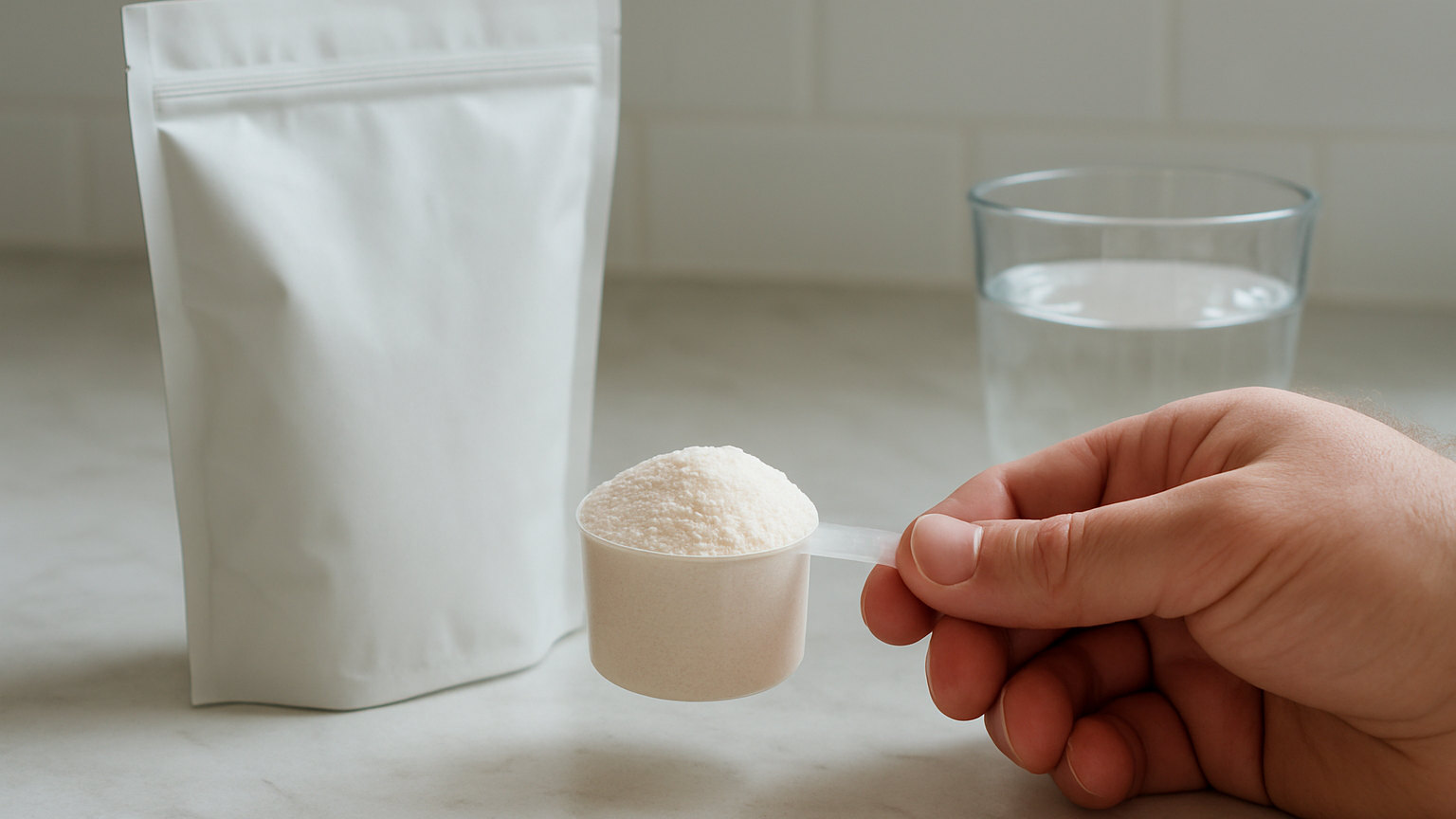
Whey digests quickly and is high in leucine, which suits post-training use. Any complete protein works, and the differences are modest once daily intake is adequate.
A meal containing meat, fish, eggs or dairy achieves the same thing.
What about fluid?
Replacing sweat losses matters, and thirst handles it for most people after ordinary training sessions.
After heavy sweating, including sodium with fluid aids retention, which is where a salted meal or an electrolyte drink has a genuine role.
What is the summary?
Protein and carbohydrate in ordinary food, without urgency unless another session is coming soon. Daily totals determine the outcome.
The rush to consume something within thirty minutes reflects outdated research rather than current understanding.
Does alcohol afterwards matter?
Yes. Alcohol after training impairs muscle protein synthesis, disrupts sleep and promotes fluid loss, which affects several recovery processes at once.
Research has found reduced synthesis even when protein was consumed alongside it.
What about eating before training instead?
A protein containing meal one to two hours beforehand leaves amino acids elevated during and after the session, which covers much of what post-training eating is meant to achieve.
For people who train early and cannot eat beforehand, eating afterwards matters somewhat more.
For most people, eating normally across the day and including protein at each meal achieves everything post-training nutrition is meant to.
Getting the daily total right removes almost all the anxiety people carry about the hours around training.