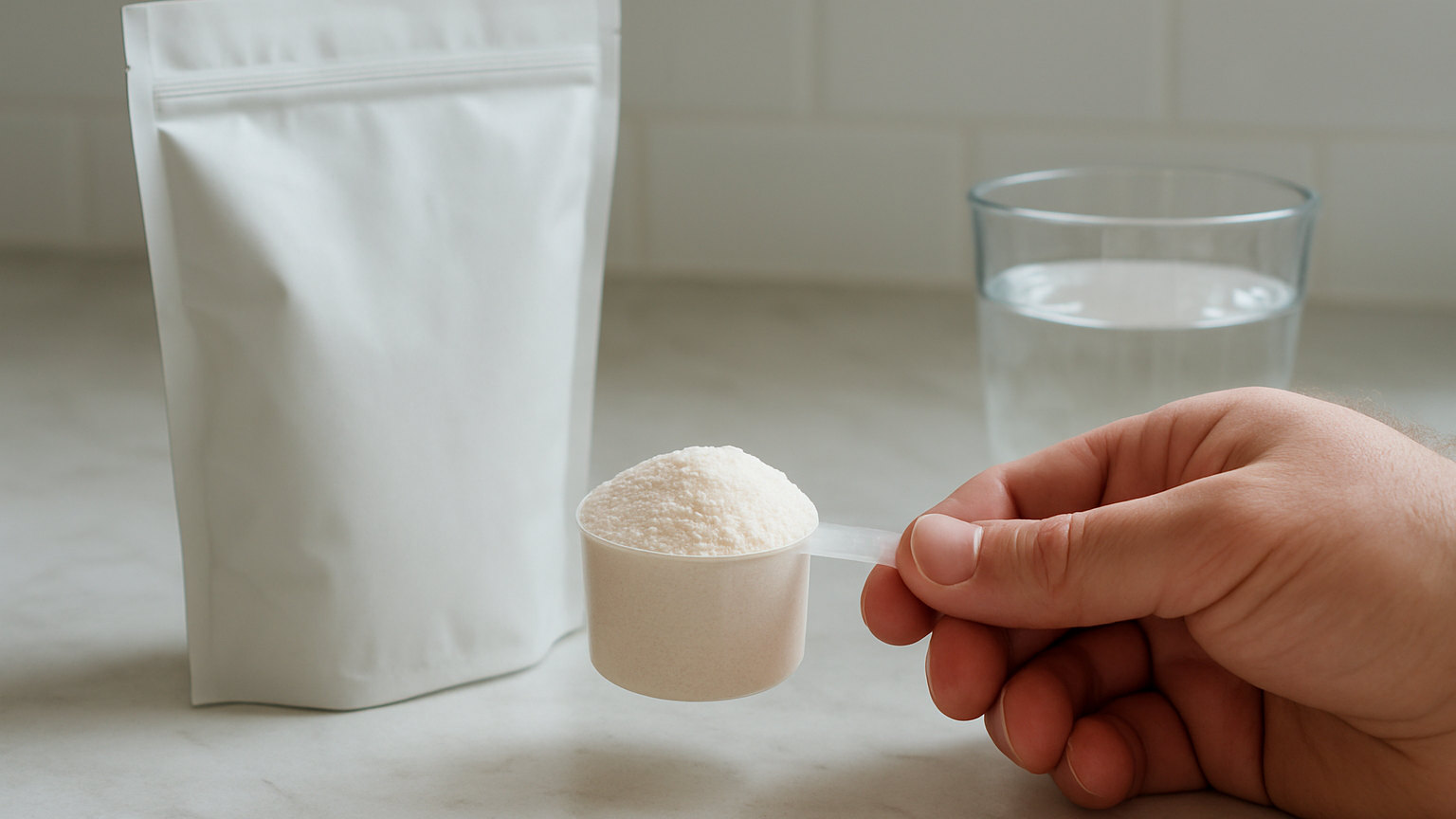
Two complaints come up more than any others with protein powder, and they have quite different explanations. Bloating is common and usually fixable. Acne is less clear cut and involves dairy more broadly than whey specifically.
What causes the bloating?
- Lactose, particularly in whey concentrate, which retains more than isolate
- Artificial sweeteners, especially sugar alcohols such as sorbitol and maltitol
- Sucralose and other sweeteners, which some people tolerate poorly
- Thickeners and gums including xanthan and carrageenan
- Drinking a large volume quickly, which introduces air
- Simply increasing protein intake rapidly
Lactose is the most common culprit, and it is straightforward to test by switching from concentrate to isolate, which contains far less.
How can you fix it?
Switch from concentrate to isolate if you suspect lactose. Try a plant based powder if dairy generally seems to be the issue.
Look for products with fewer additives and simpler ingredient lists. Some unflavoured powders contain nothing but the protein itself.
Take smaller amounts more often rather than a large single serving, and drink it slowly rather than quickly.
Increase intake gradually over a couple of weeks rather than jumping straight to a high dose.
Is it a milk allergy?
Lactose intolerance and milk protein allergy are different conditions. Intolerance causes bloating, wind and loose stools, and allergy involves the immune system and can cause rashes, swelling and breathing difficulty.
Whey isolate still contains milk protein and is unsuitable for anyone with a milk allergy, even though it contains little lactose.
What about the acne link?
Observational studies have found associations between dairy consumption and acne, with skimmed milk showing the strongest association in several cohorts.
Case reports and small studies have described acne developing or worsening in people starting whey protein, sometimes resolving on stopping it.
The evidence is not strong enough to establish causation, and it is consistent enough to be worth knowing about.
What is the proposed mechanism?
Dairy proteins, particularly whey, stimulate insulin and insulin-like growth factor 1. IGF-1 increases sebum production and skin cell proliferation, both of which contribute to acne.
Whey is more insulinotropic than casein, which is why it attracts more attention than dairy generally.
What should you do if acne appears?
Try switching to a plant based protein for eight to twelve weeks and see whether it changes, keeping everything else constant.
Eight to twelve weeks is necessary because acne treatments and changes generally take that long to assess. Photographs help, since gradual change is hard to judge from memory.
If acne is persistent or scarring, see a GP, since effective prescribed treatments exist and have far better evidence than any dietary change.
Are there other side effects?
Some people report constipation when increasing protein sharply, usually reflecting reduced fibre and fluid rather than protein itself.
Increasing water and vegetable intake alongside protein generally resolves it.
What is the summary?
Most bloating is caused by lactose or additives and responds to switching products. The acne link is plausible and unproven, and switching is a reasonable personal experiment.
This article is general information and not medical advice.
Could it be something else?
Increasing protein often coincides with other changes, including training harder, sweating more, using new skincare or changing overall diet.
Changing one thing at a time makes it possible to identify the cause, which is difficult if several things changed at once.
Do unflavoured powders help?
Often, since they contain fewer additives. An unflavoured whey isolate may contain nothing but the protein, removing sweeteners and thickeners from the equation.
They taste less pleasant and mix well into porridge, smoothies or cooking where flavour matters less.
What is the summary?
Most bloating comes from lactose or additives and is solved by switching products. The acne link is worth testing personally over eight to twelve weeks if it concerns you.
Both complaints are worth taking seriously and worth investigating systematically, since in most cases a simple product change resolves them.