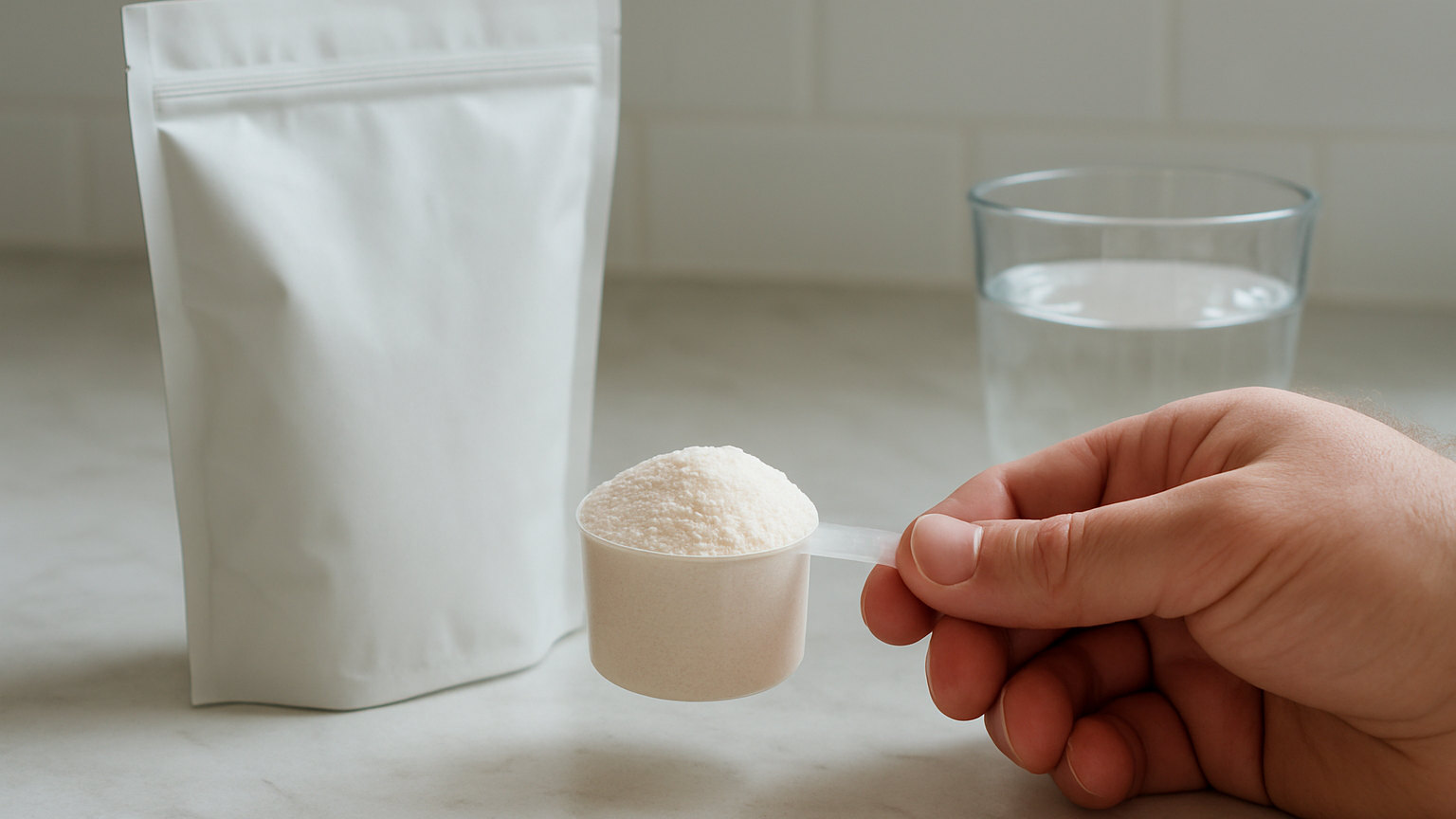
Protein powder occupies a strange position in gym culture, treated as a requirement rather than a convenience. It is dried food, and muscle does not distinguish between amino acids from a shake and amino acids from chicken.
What actually builds muscle?
Two things above all others: a training stimulus that progressively challenges the muscle, and enough total protein and energy to support the adaptation.
Training is the signal and protein is the material. Neither works without the other, and no supplement substitutes for either.
Sleep, consistency over months, and progressive overload all matter more than any product on a shelf.
How much protein does it take?
A meta-analysis of resistance training studies found muscle gains plateaued at around 1.6 grams per kilogram of body weight daily, with the upper confidence limit around 2.2.
For a 75 kilogram person that is around 120 grams a day, which is achievable from food for most people who eat meat, fish, eggs or dairy.
Can you get that from food?
Comfortably, with some planning. Consider a day containing eggs at breakfast, chicken or tuna at lunch, Greek yoghurt as a snack and fish or meat at dinner.
- Three eggs supply around 18 grams
- A chicken breast supplies around 30 grams
- A tin of tuna supplies around 25 grams
- A large pot of Greek yoghurt supplies around 20 grams
- A portion of lentils supplies around 9 grams
- A pint of milk supplies around 19 grams
That comes to over 110 grams without anything unusual, and without a shake.
When does powder genuinely help?
When food is inconvenient or appetite is limited. Someone training after work who will not eat for two hours may find a shake practical.
People with high requirements, such as larger individuals training heavily, may struggle to eat enough whole food and find powder makes the target achievable.
Plant based lifters often use it because reaching high protein intakes from plants alone requires more volume and planning.
Is powder better absorbed?
Whey is absorbed faster than most whole foods, producing a sharper rise in blood amino acids and a stronger acute muscle protein synthesis response.
Whether that acute difference produces more muscle over months is much less clear, and trials comparing whole food to supplements have generally found similar long term results.
One study comparing whole eggs with egg whites found the whole eggs produced a greater response despite matched protein, which suggests food matrices may have their own advantages.
What do people get wrong?
Treating the shake as the intervention rather than the training. Someone taking protein powder without a progressive resistance programme will not build meaningful muscle regardless of dose.
Also common is adding a shake on top of an already adequate intake, which adds calories rather than muscle.
Is it worth the money?
Compared per gram of protein, powder is competitive with chicken and cheaper than many protein sources. It is not expensive relative to food, which is a reasonable argument for using it.
It is expensive relative to the results it produces if you are already eating enough protein.
What is the honest summary?
Protein powder is useful, unnecessary, and neither of those statements contradicts the other. Use it if it helps you reach your target; do not assume it is doing anything the food could not.
This article is general information and not medical advice.
What about the cost per gram?
Protein powder compares favourably with chicken and fish per gram of protein, and unfavourably with eggs, milk and dried pulses.
It is not the expensive option people assume, which weakens the argument against it as much as the argument for it.
Does it matter for beginners?
Beginners gain muscle readily provided training and protein are adequate, and adding a supplement makes little difference to that.
The more useful investment early on is establishing a consistent training programme and a reasonable eating pattern, both of which outlast any supplement decision.
What is the summary?
Protein powder helps you reach a target that food could also reach. It is convenient rather than necessary, and neither of those is a criticism.
The training programme is what builds the muscle, and no supplement compensates for its absence.