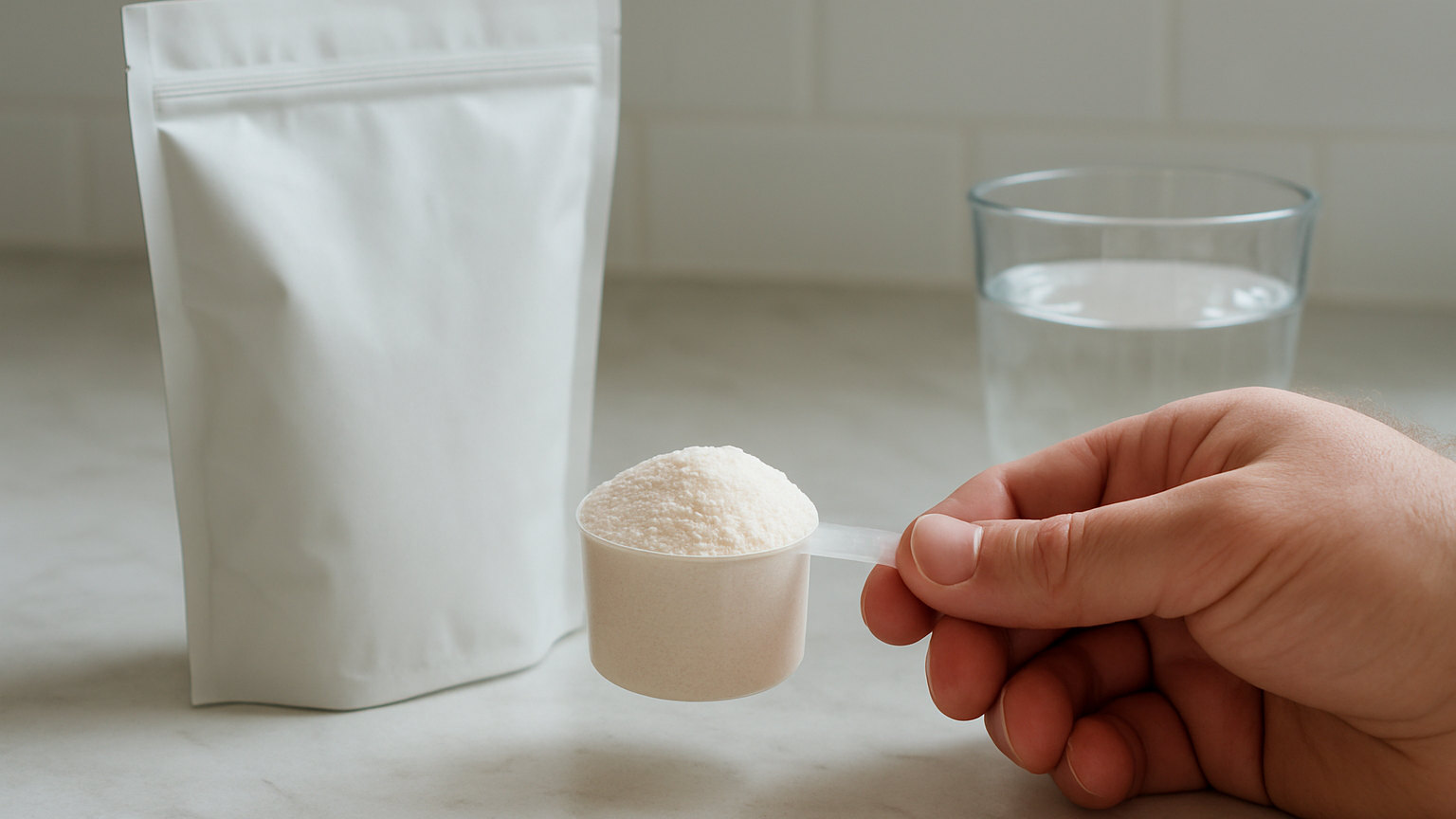
Protein powder is marketed as though reaching adequate protein requires it. For most people, including most people training seriously, ordinary food covers the target without much difficulty.
What does a target look like?
For general health, 0.75 grams per kilogram is the UK reference figure. For someone training for muscle, around 1.6 grams per kilogram is where gains plateau in the research.
For a 75 kilogram person that is roughly 56 grams and 120 grams respectively.
How much protein is in common foods?
- Chicken breast, around 30 grams per breast
- Tin of tuna, around 25 grams
- Three eggs, around 18 grams
- Greek yoghurt, around 15 to 20 grams per large pot
- Pint of milk, around 19 grams
- Cottage cheese, around 25 grams per pot
- Salmon fillet, around 25 grams
- Portion of lentils, around 9 grams
- Slice of wholemeal bread, around 4 grams
Protein accumulates from foods people forget to count, including bread, pasta, rice, nuts and vegetables, which together contribute a surprising amount.
What does a 120 gram day look like?
Three eggs on wholemeal toast at breakfast supplies around 26 grams. A chicken and bean salad at lunch supplies around 40. Greek yoghurt as a snack supplies 20. Salmon with rice and vegetables at dinner supplies around 30.
That comes to roughly 116 grams without any supplement, and without unusual quantities of food.
Is it harder on a plant based diet?
Harder rather than impossible. Plant proteins are less concentrated, so reaching the same total requires more volume, and fibre content can make that filling.
Tofu, tempeh, seitan, lentils, beans, edamame and soya milk are the most efficient options. Seitan in particular is very high in protein by weight.
A plant based person aiming for 120 grams would need to build meals around these deliberately rather than incidentally.
When does powder genuinely help?
When appetite is limited, when time is short, when protein targets are high relative to body size, or when travelling and eating irregularly.
It is a convenience food, and convenience is a legitimate reason to use something.
Is food better in any respect?
It brings other nutrients alongside the protein, including iron, zinc, B12, calcium and fibre depending on the source.
One study comparing whole eggs with an equivalent amount of egg white protein found the whole eggs produced a greater muscle protein synthesis response, suggesting the food matrix may contribute something.
What is the cost comparison?
Protein powder is competitive per gram of protein with chicken and cheaper than many meat and fish options. Eggs, tinned fish, milk and dried pulses are generally cheaper still.
What is the practical approach?
Build meals around a protein source, count what you actually eat for a few days to see where you stand, and add powder only if there is a genuine gap.
Most people discover they are either closer to their target than expected or a long way off for reasons a shake will not fix. This article is general information and not medical advice.
What about very high targets?
Someone aiming for 180 grams or more daily may genuinely find food alone difficult, particularly if appetite is limited or training volume is high.
This is where powder earns its place most clearly, since the alternative is eating a volume of food that becomes impractical.
How accurate is your estimate?
Most people are poor at estimating protein intake, in both directions. Tracking honestly for three or four days gives a far better picture than guessing.
People frequently discover they are eating either considerably more or considerably less than they assumed, which changes what they should do next.
What is the summary?
Food covers protein requirements for almost everyone. Powder is a convenience that helps with high targets, limited appetite or irregular schedules.
The useful first step is finding out where you actually are rather than assuming, since the answer determines whether you need to change anything at all.