Creatine works by saturating muscle stores over weeks, which makes it fundamentally different from supplements with acute effects. That mechanism explains why timing matters so little.
Why does timing matter less than for other supplements?
Because the benefit comes from having elevated muscle creatine content, not from a response to a particular dose.
Once stores are saturated, the daily dose simply maintains them, replacing the roughly two grams lost each day through conversion to creatinine.
Whether that replacement happens at eight in the morning or nine at night makes no difference to the pool it is topping up.
Is there any evidence for post-workout?
Some, and it is modest. A few studies have compared taking creatine before versus after resistance training and reported slightly better outcomes for the post-workout group.
The studies were small and the differences modest, and other trials have found no difference. The proposed mechanism involves increased blood flow to muscle after training aiding uptake.
If you want to optimise on limited evidence, after training is a reasonable default. If it is inconvenient, it is not worth reorganising your day for.
Does carbohydrate help uptake?
Yes, to a degree. Insulin promotes creatine uptake into muscle, and studies combining creatine with substantial carbohydrate found greater muscle creatine accumulation.
The carbohydrate amounts used in those studies were large, often around 90 grams or more, which brings calories most people do not want.
Taking creatine with a normal meal achieves some of this benefit without the deliberate sugar load, and once stores are saturated the point becomes moot.
Should you take it on rest days?
Yes. Muscle creatine declines gradually regardless of whether you trained, so the maintenance dose applies every day.
Skipping rest days would slowly reduce stores over time, undermining the point of taking it at all.
Does it matter what you mix it with?
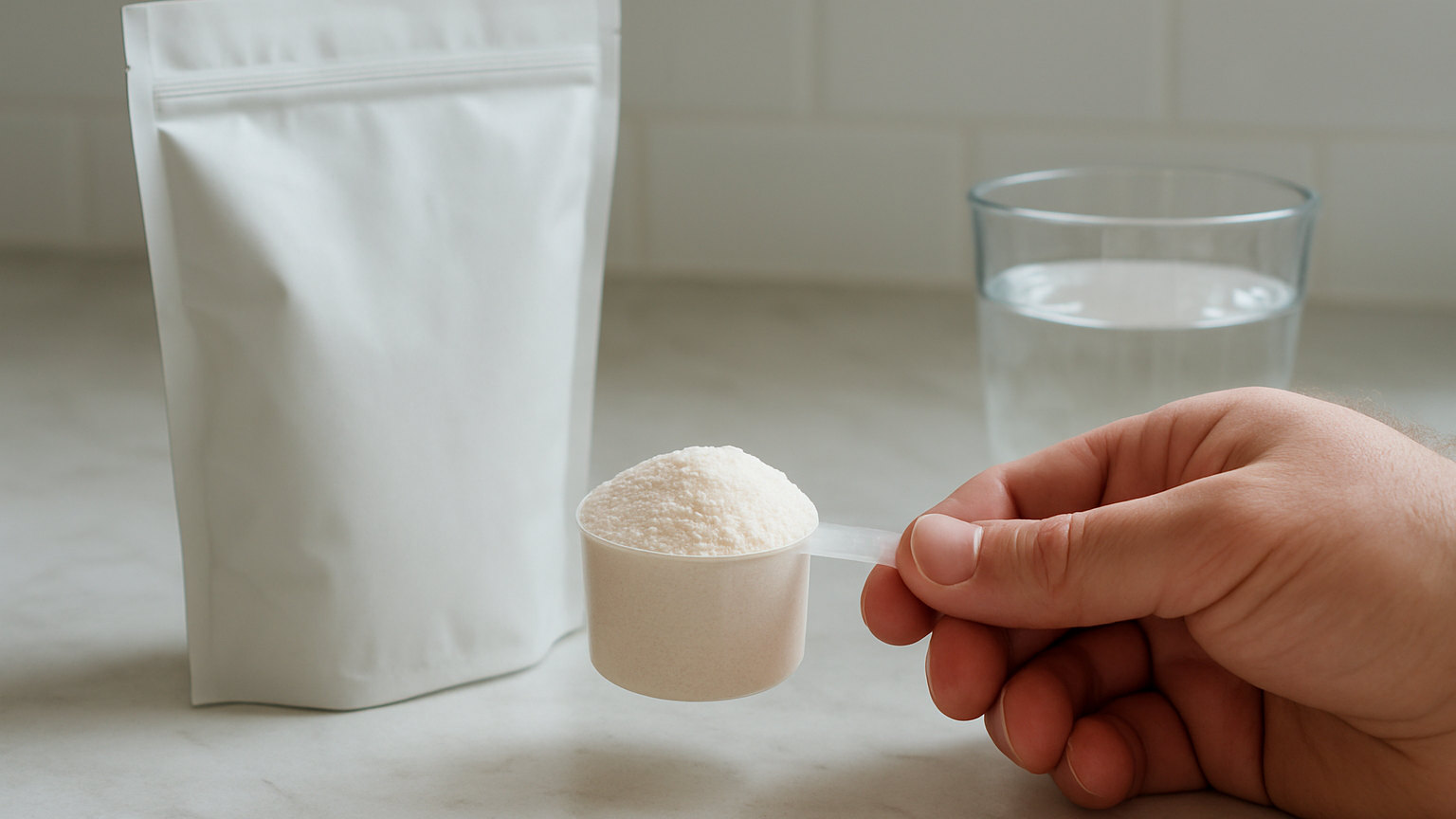
- Water, juice or a protein shake all work
- Warm liquid helps it dissolve, and very hot liquid accelerates degradation
- Mixing and drinking promptly avoids conversion to creatinine in solution
- Adding it to food such as porridge or yoghurt works perfectly well
What about caffeine?
An older study suggested caffeine might blunt the performance benefit of creatine, which generated lasting concern.
The finding has not been reliably replicated, and many pre-workout products combine both without apparent problem. It is not considered a significant issue by current position stands.
If you are concerned, taking them at different times costs nothing.
Does time of day affect anything?
No evidence supports a particular time. Morning, evening and around training all produce the same saturation over weeks.
Choose whatever you will remember, since a missed dose matters more than a suboptimal hour.
What if you forget?
Take it when you remember and continue as normal. The muscle pool is large relative to a daily dose, so occasional missed days have no meaningful effect.
Consistency over weeks is what matters. This article is general information and not medical advice.
What about splitting the dose?
Unnecessary at maintenance levels. Three to five grams is easily absorbed in one serving and there is no advantage to dividing it.
Splitting matters during loading, where 20 grams at once commonly causes stomach discomfort and four doses of five grams does not.
Is fasting or fed relevant?
Taking creatine with food may aid uptake slightly through the insulin response, and the difference is small once stores are saturated.
Anyone experiencing stomach discomfort should take it with a meal, which usually resolves it.
What is the summary?
Take it daily, at whatever time you will remember, ideally with food. After training is a marginally supported preference rather than a requirement.
Consistency over weeks is what fills the muscle pool, and that is the whole mechanism.
The practical message is that creatine is unusually forgiving about how you take it, which removes one thing to worry about.
Attaching it to an existing daily habit, such as a morning drink or an evening meal, removes the need to remember it separately.