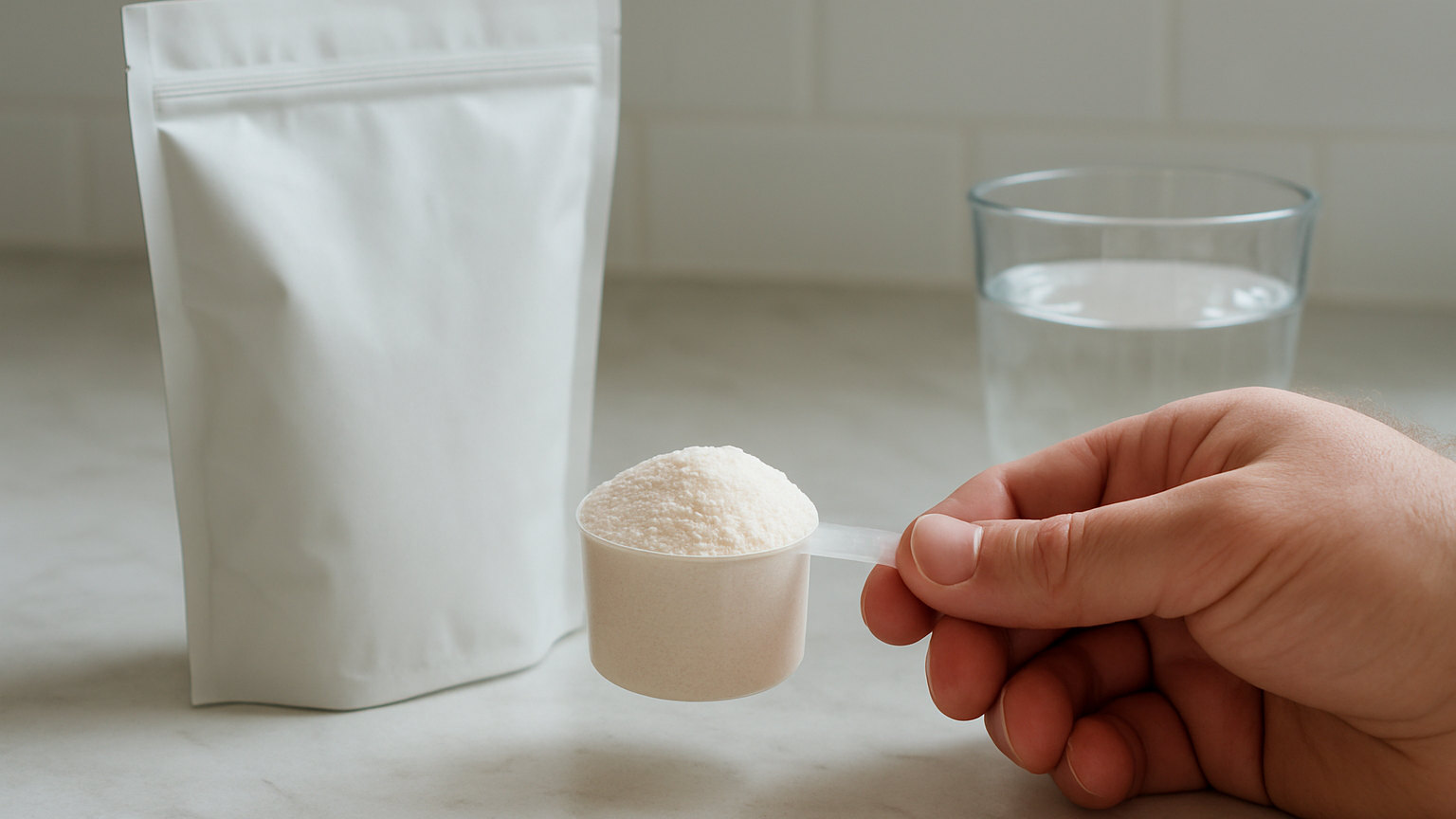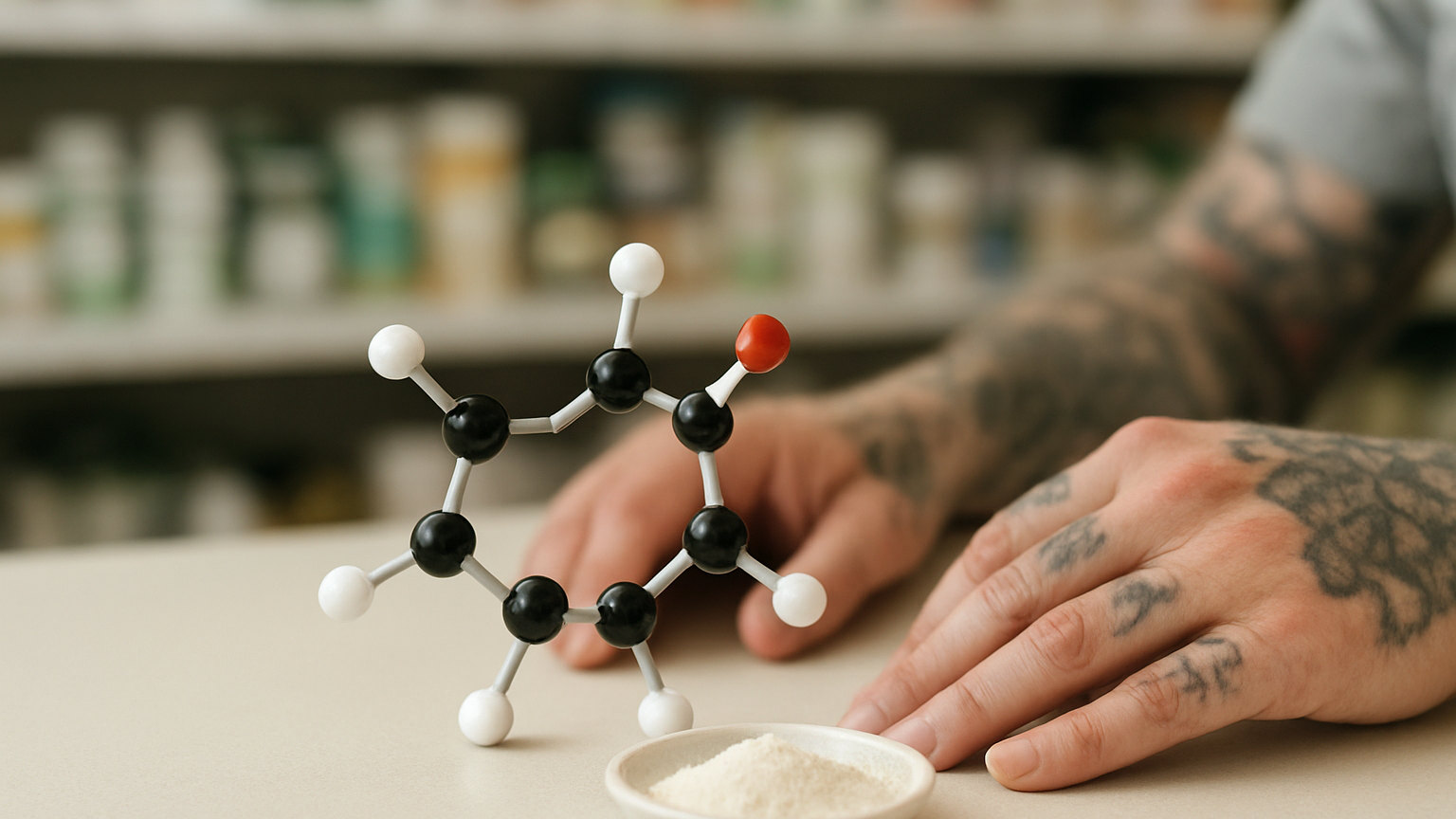
Creatine works by filling muscle stores, so the timeline depends on how fast you fill them and how quickly the resulting extra training capacity turns into visible change. Those are two different questions with different answers.
How fast do stores saturate?
With a loading protocol of around 20 grams daily split into four doses, muscle creatine approaches saturation within five to seven days.
With a standard three to five grams daily, the same saturation is reached in roughly three to four weeks.
Both arrive at the same place, with loading simply getting there faster and using more product along the way.
What happens first?
Weight gain of around one to two kilograms, appearing within the first week or two of loading, or more gradually on a standard dose.
This is water drawn into muscle cells alongside creatine, and it is generally the first observable sign that uptake is occurring.
Some people notice muscles feeling fuller or a slight increase in the weight they can handle within the first fortnight.
When do performance changes appear?
Measurable improvements in high intensity performance can appear within one to two weeks of saturation, particularly in repeated sprint or repeated set work.
These are modest: an extra repetition or two at a given weight, or slightly better performance on later sets.
When does muscle gain follow?
Considerably later, because the mechanism is indirect. Creatine allows more training volume, and that additional volume produces adaptation over weeks to months.
Meaningful changes in muscle mass generally take eight to twelve weeks of consistent training to become apparent, and creatine accelerates rather than replaces that process.
Anyone expecting visible change within a fortnight is likely to be disappointed and to conclude incorrectly that it does not work.
How would you assess whether it is working?
- Track repetitions completed at a fixed weight over four to eight weeks
- Note whether later sets hold up better than they did previously
- Keep training and diet otherwise consistent during the trial
- Allow at least four weeks after starting before judging
Changing several things at once makes it impossible to attribute any improvement, which is a common reason people cannot tell whether a supplement helped.
What if nothing happens?
A minority of people respond little, usually because baseline stores were already close to saturation. Meat eaters with high intake are more likely to fall into this group.
It is also worth checking that your training is the kind creatine helps, since it does little for long steady endurance work.
How long until it wears off?
Stores decline over roughly four to six weeks after stopping, along with the associated water weight.
Muscle gained through the extra training is retained, which is the part that matters.
What is a realistic expectation?
Slightly better training over months, resulting in somewhat more muscle and strength than you would otherwise have gained. Not a transformation, and a real and reliable effect.
This article is general information and not medical advice.
Does the format affect the timeline?
No. Monohydrate powder, capsules and micronised versions all deliver the same compound and saturate stores over the same period.
Alternative forms marketed as faster acting have not demonstrated faster saturation in comparison studies.
What about the first few days?
Little happens beyond the beginning of water uptake. Expecting an effect from the first dose misunderstands the mechanism, since creatine is not an acute performance aid in the way caffeine is.
Anyone wanting something noticeable on the day is thinking of a different supplement.
What is the summary?
Stores fill in one to four weeks depending on protocol, performance changes appear shortly after, and visible muscle change takes months of training on top.
Judging creatine after two weeks is judging it before it has finished arriving.
Setting a realistic timeline before starting prevents the common outcome of abandoning something after a fortnight that needed two months.
Keeping a simple training log makes the assessment far more reliable than memory, since gradual improvements are difficult to notice day to day.