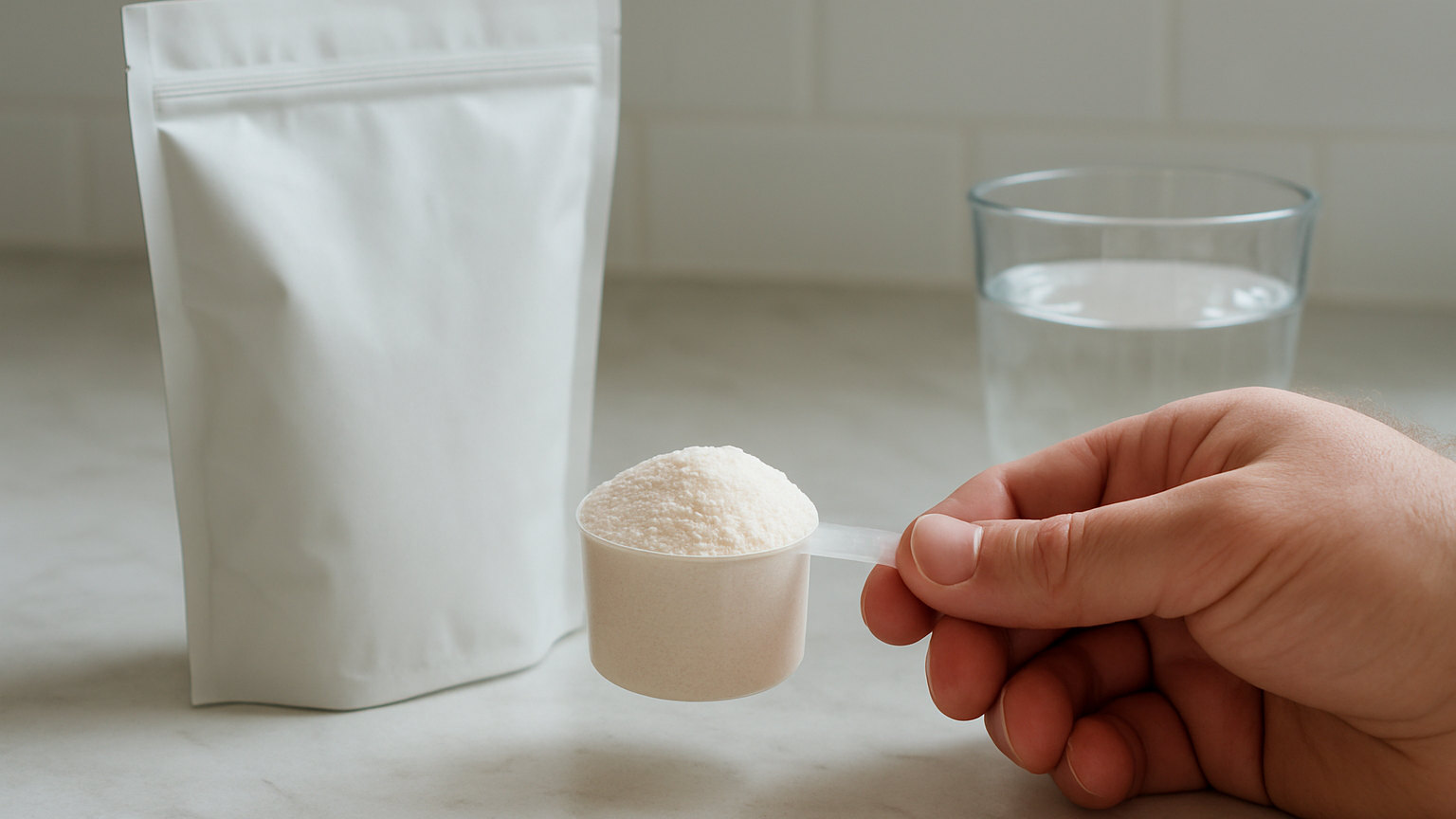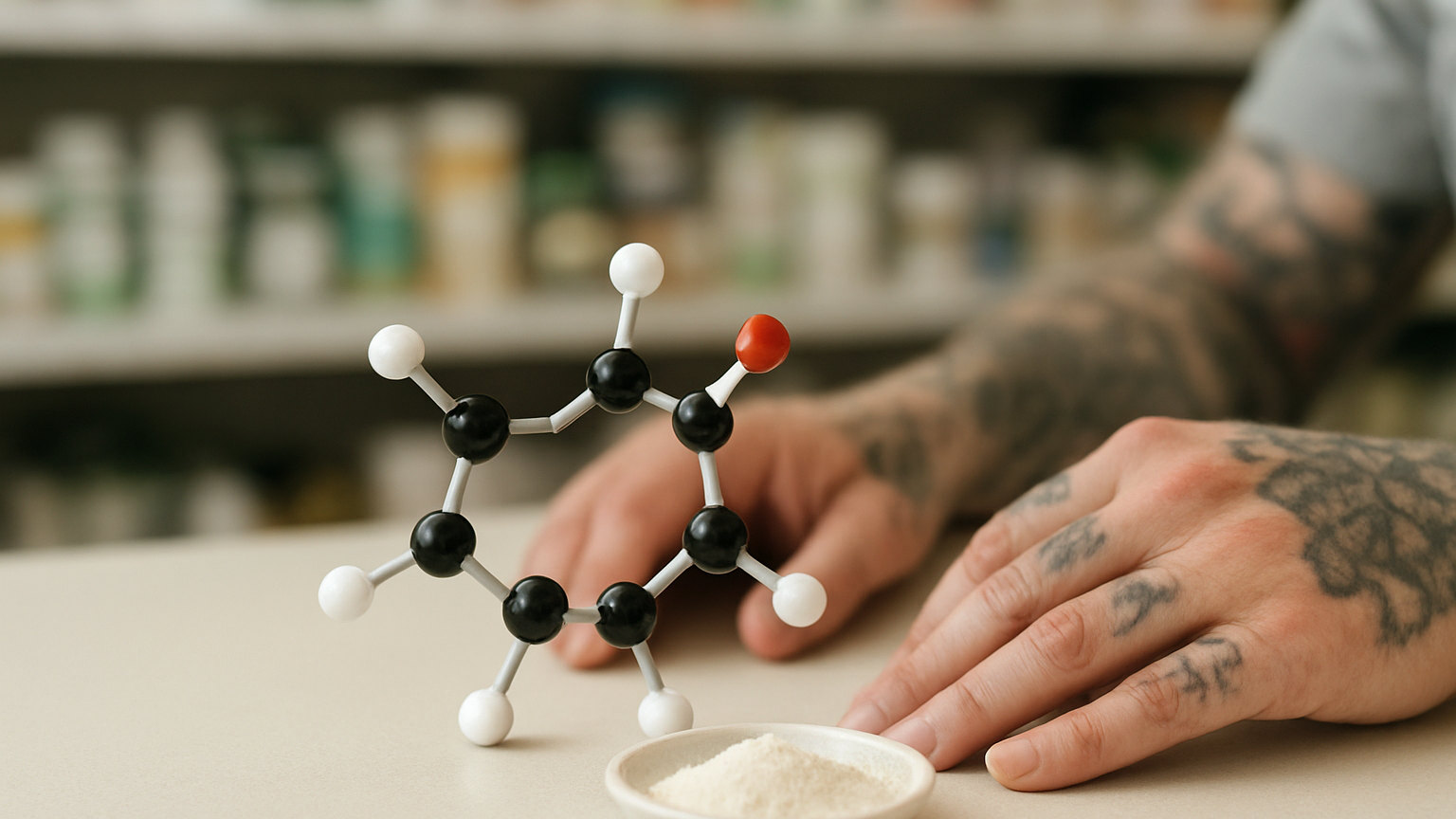
Creatine monohydrate at 3 to 5 grams a day is one of the most thoroughly studied supplements in existence and one of the few that reliably does what it claims. It increases the amount of work you can do in short, hard efforts, which over months translates into more strength and more muscle. The loading phase is optional, and the two things people worry about most are largely myths.
What it does
Your muscles store creatine as phosphocreatine, which regenerates ATP during very short intense efforts. More phosphocreatine means you can produce force for slightly longer before fatiguing.
In practice that shows up as an extra repetition or two on a heavy set, or a marginally better final sprint. That sounds trivial, and it is exactly why it works: a small increase in training volume, repeated over months, adds up to a measurable difference in strength and lean mass.
Supplementation typically raises muscle creatine by 20 to 40 per cent, with the largest gains in people who eat little red meat or fish, since those are the main dietary sources. Vegetarians tend to respond most.
Which form to buy
Creatine monohydrate. It has the overwhelming majority of the research behind it, it is the cheapest by a wide margin, and no alternative form has convincingly beaten it.
Hydrochloride, ethyl ester, buffered and liquid versions all cost more and none has shown superiority in head-to-head studies. Micronised monohydrate is simply monohydrate ground finer, which helps it mix and is a reasonable thing to pay slightly more for.
Loading, or not
The loading protocol is around 20 grams a day, split into four doses, for five to seven days, then 3 to 5 grams daily. This saturates muscle stores in under a week.
Skipping the load and taking 3 to 5 grams from the start reaches the same saturation in three to four weeks. The end point is identical.
Loading is only worth it if you need the effect within a fortnight. It also causes most of the stomach upset associated with creatine, since 20 grams at once is a lot for the gut to handle. Splitting into four doses with food largely avoids that.
Timing
Timing matters far less than consistency. Some studies suggest a slight advantage to taking it after training rather than before, but the effect is small and inconsistent.
Take it whenever you will remember to take it every day, including rest days. Muscle saturation is what matters, not the gap between dose and workout.
The water weight
Creatine draws water into muscle cells, and most people gain one to two kilograms in the first weeks. This is intracellular water, inside the muscle, not the subcutaneous water that makes people look puffy.
If anything it makes muscles look fuller. The concern about bloating is misplaced for the great majority of users, though the extra kilogram or two matters to anyone competing in a weight category.
The kidney question
Creatine supplementation raises blood creatinine, which is used as a marker of kidney function. That has led to a persistent belief that creatine damages kidneys.
In people with healthy kidneys, studies lasting up to five years have found no evidence of harm. The raised creatinine reflects more creatine in the body, not impaired filtration. Tell your GP you take it if you are having kidney function tested, so the result is interpreted correctly.
People with existing kidney disease should take medical advice before using it.
Beyond the gym
Research into creatine and cognition, particularly under sleep deprivation or in vegetarians, has produced some interesting early results. There is also active interest in older adults combining creatine with resistance training for muscle preservation, where the evidence is reasonably encouraging.
These are promising rather than settled. The strength and lean mass findings remain the well-established ones.
Quality and safety
Look for creatine carrying a third-party testing mark, particularly if you compete under anti-doping rules, since contamination of supplements is a recognised route to inadvertent violations. Creatine itself is not a banned substance.
Because it is cheap to produce and long out of patent, there is little incentive for anyone to sell an inferior version, and plain monohydrate from a reputable supplier is difficult to get wrong. Ignore anything sold at several times the price on the strength of a proprietary blend.
This article is general information and not medical advice. Check with a GP or pharmacist before starting, especially if you take prescribed medication.