Beta alanine dosing is unusual among supplements in that timing is almost irrelevant and total daily intake is everything. The reason is that carnosine builds up gradually rather than responding to any individual dose.
What dose does the research use?
Most studies have used between 4 and 6.4 grams daily, with position stands from sports nutrition bodies generally recommending 4 to 6 grams per day for at least two to four weeks.
Some early research used 3.2 grams, which produces smaller increases in carnosine over the same period.
Doses in most pre-workout products are far below this, frequently under a gram, which is unlikely to produce the studied effect regardless of how much tingling it causes.
Why does splitting matter?
For two reasons, one practical and one physiological.
The practical reason is paraesthesia, the tingling sensation, which is dose dependent and largely avoidable by keeping individual doses at or below around 800 milligrams to 1.6 grams.
The physiological reason is that beta alanine transport into muscle may be saturable, so smaller amounts more often may be used more efficiently than one large dose.
What does a schedule look like?
- Four doses of 1.2 grams spread across the day, totalling 4.8 grams
- Three doses of 1.6 grams with meals
- Two larger doses if you tolerate the tingling
- A sustained release product taken once or twice daily
Taking it with meals may improve uptake somewhat and also reduces the tingling by slowing absorption.
Does timing around training matter?
No, which is the key practical point and the one most often misunderstood.
Beta alanine does not act acutely. Taking it before training does nothing for that session beyond causing tingling, because the benefit comes from carnosine that accumulated over previous weeks.
This makes its inclusion in pre-workout products somewhat misleading, since the format implies an acute effect it does not have.
Is more than 6 grams better?
Higher doses do produce larger carnosine increases, and the relationship flattens and side effects increase.
Most research stops around 6.4 grams daily. Going higher is unlikely to add much and will produce more tingling.
Does body weight matter?
Some guidance suggests scaling to around 65 milligrams per kilogram, which for a 75 kilogram person is roughly 4.9 grams.
The difference between that and a flat dose is small for most people, and a fixed 4 to 6 grams is a reasonable approach.
How long should you continue?
Carnosine continues rising for at least ten to twelve weeks, so longer supplementation produces larger increases.
Once elevated, a maintenance dose lower than the loading amount may suffice, though this is less well studied than the initial protocol.
What is the summary?
Take 4 to 6 grams daily, split into doses of around 1.6 grams or less, at any time of day, every day including rest days.
This article is general information and not medical advice.
What about pre-workout products?
Most contain well under a gram, which is a fraction of the research dose. Even taken daily, that would build carnosine far more slowly than the studied protocols.
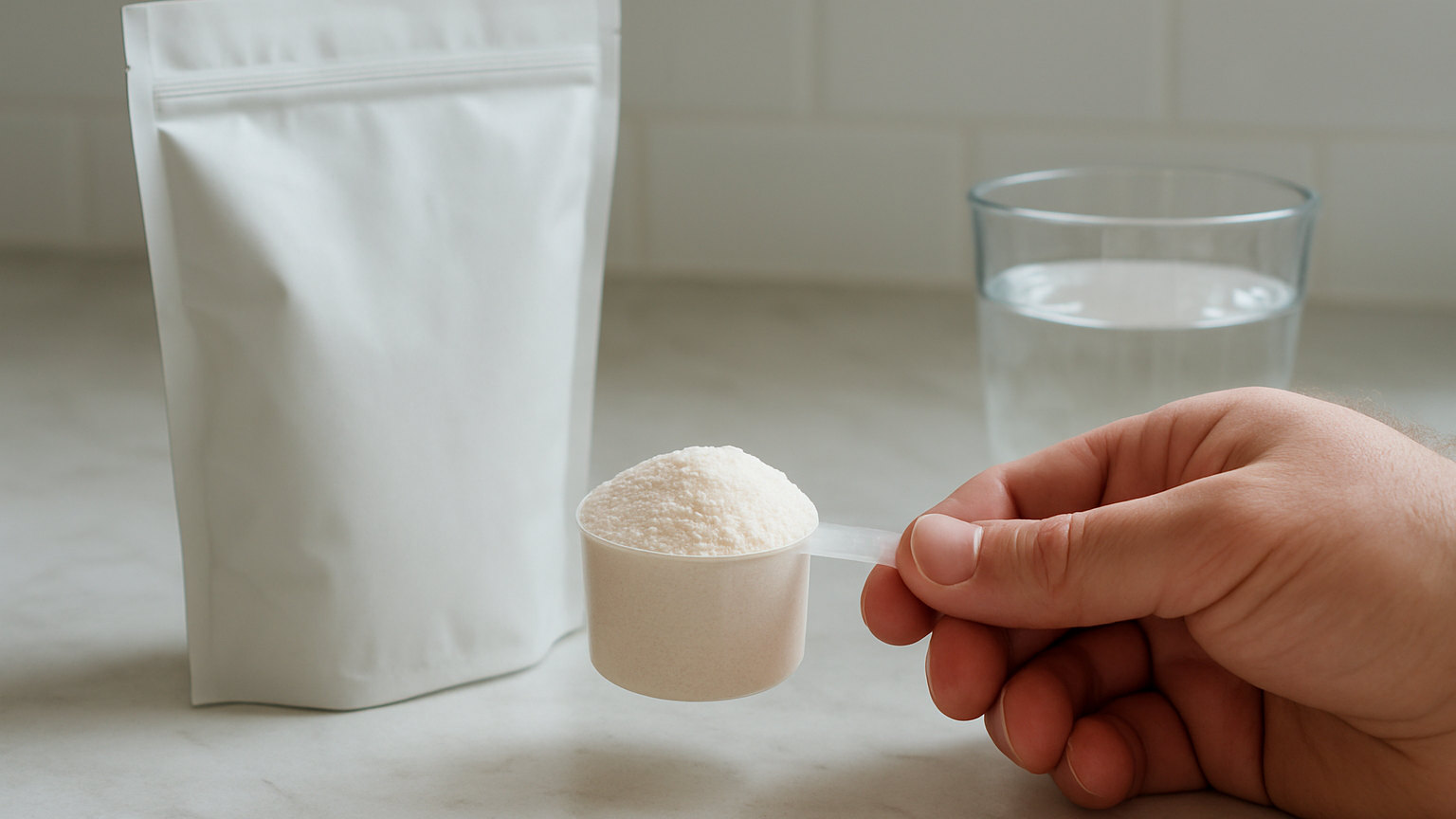
Buying plain beta alanine in bulk costs very little and allows proper dosing, which matters more here than with almost any other ingredient.
Does it need to be taken with anything?
No, though taking it with meals slows absorption slightly, which reduces the tingling and may aid uptake.
There is no requirement for carbohydrate or any other co-ingredient, unlike the insulin effect sometimes discussed with creatine.
What is the practical protocol?
Four to six grams daily, split into three or four doses of 1.6 grams or less, taken with meals, every day.
Nothing about training schedules, timing windows or loading phases enters into it.
How does the cost compare?
Bulk beta alanine powder is inexpensive, with a month at research doses typically costing a few pounds.
Getting the same daily amount from pre-workout servings would cost many times more and deliver caffeine you may not want alongside it.