Passionflower is one of the more commonly used herbal sedatives in the UK and has a modest research base behind it.
What is passionflower?
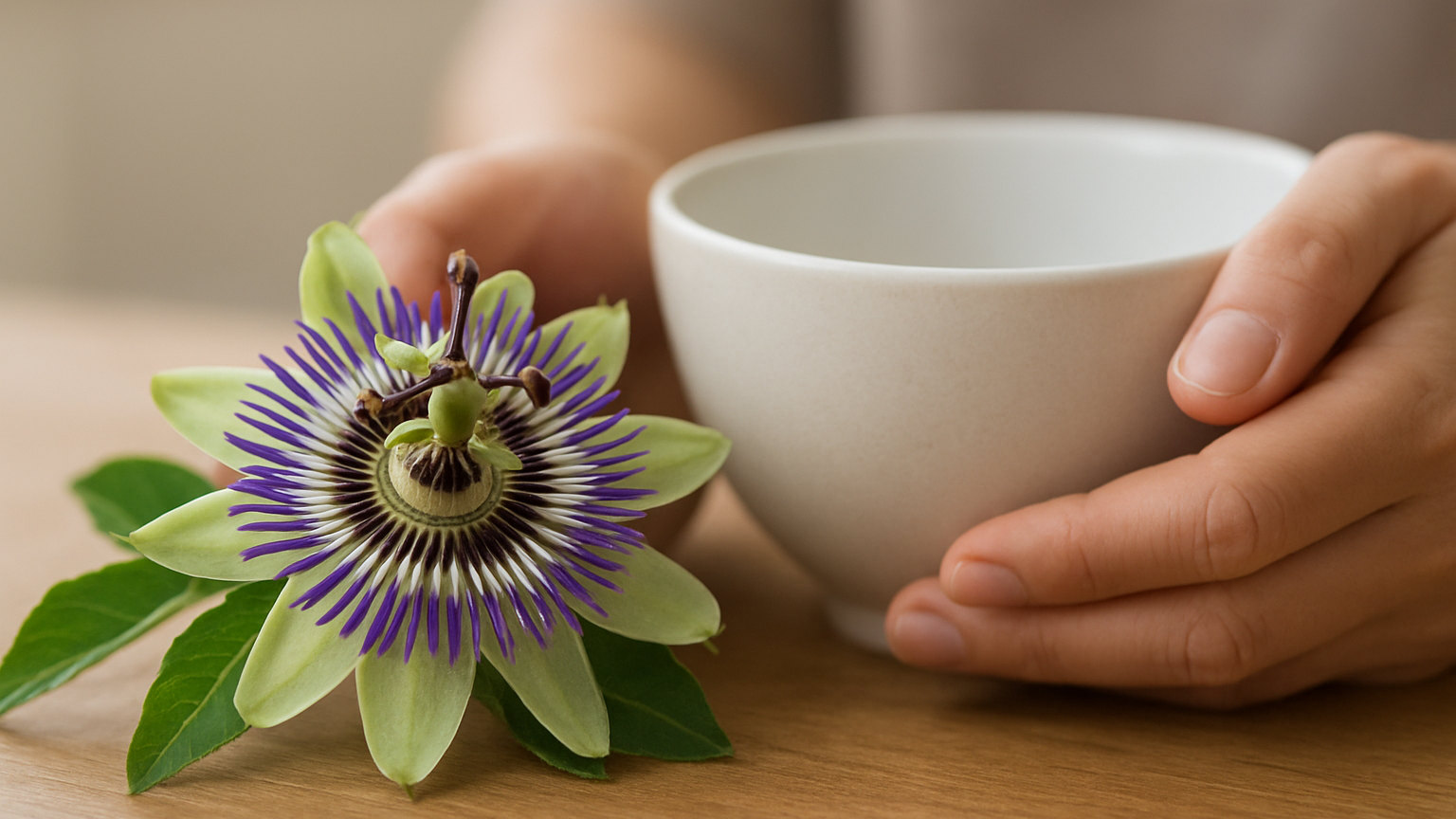
The above ground parts of Passiflora incarnata, a climbing plant native to the Americas, used as a tea, tincture or tablet.
Some passionflower products in the UK carry a traditional herbal registration, which means quality and safety have been assessed even though efficacy has not.
What do people take it for?
Mild anxiety and difficulty sleeping, most often as an alternative to medication or alongside other calming approaches.
It appears frequently in combination sleep products with valerian, lemon balm and hops.
What does the research show?
Small trials have reported reductions in anxiety scores, with one older study finding passionflower comparable to a benzodiazepine over four weeks.
Sleep research has reported modest improvements in subjective sleep quality.
Studies have generally been small and short, and reviewers describe the evidence as preliminary.
How does it work?
Effects on GABA signalling have been proposed, which is the same system several prescribed sedatives act on.
The mechanism is not fully characterised, and the compounds responsible have not been definitively identified.
What are the side effects?
- Drowsiness, which is the intended effect and matters during the day
- Dizziness and confusion in some people
- Nausea occasionally
Anyone taking passionflower should establish how it affects them before driving or operating machinery.
What should it not be combined with?
Sedatives, sleeping tablets, benzodiazepines and alcohol, where effects are additive.
Anaesthetic agents, which is why it is generally stopped before surgery.
Other sedating supplements, since combination products can add up more than expected.
Who should avoid it?
Pregnant women, since some constituents may stimulate the uterus, and breastfeeding women.
Anyone due to have an operation within two weeks.
What has better evidence for anxiety and sleep?
Cognitive behavioural approaches, which have strong evidence for both and are available through the NHS.
Consistent sleep timing, reducing caffeine and limiting alcohol all matter more than any herbal product.
When should you seek help?
If anxiety is affecting daily life, or insomnia has persisted for more than a few weeks.
Both are treatable and neither should be managed indefinitely with a supplement.
What is the summary?
Passionflower is taken for anxiety and sleep with modest supporting trials, and it is sedating enough that combinations need care.
This article is general information and not medical advice.
What dose is used?
Trials have used varying preparations, commonly extract equivalent to several hundred milligrams of dried herb, or an infusion drunk two or three times daily.
Tea supplies considerably less than a concentrated extract, which matters when comparing products.
What about combination products?
Passionflower is frequently combined with valerian, hops and lemon balm in sleep formulations.
Combinations make it impossible to know what is producing any effect, and they stack sedative ingredients.
How long does it take?
Sedative effects may be noticed the same evening, while anxiety trials measured outcomes over several weeks.
Judging it fairly for anxiety means giving it a month rather than a few nights.
What is the traditional registration?
Registered products have been assessed for quality and safety and carry appropriate warnings, without efficacy having been demonstrated.
For a herbal sedative that assurance is worth preferring.
How does it compare with valerian?
Both are traditional herbal sedatives with limited trial evidence, and they are frequently combined in the same product.
Neither has evidence approaching that for behavioural approaches to insomnia.
Who might it suit?
Someone with mild occasional sleeplessness who wants a low risk option and does not drive shortly afterwards.
It is not a treatment for a diagnosed anxiety disorder.
What about long term use?
Trials ran weeks rather than months, so long term safety data is limited as it is for most herbal sedatives.
Using passionflower occasionally rather than nightly is a reasonable approach.
Persistent sleep problems deserve proper assessment.
A pharmacist can advise on whether passionflower is suitable alongside anything you already take.