Lemon balm is among the gentler herbal sedatives and appears in most combination sleep and calming products sold in Britain.
What is lemon balm?
The leaf of Melissa officinalis, a lemon scented member of the mint family, grown widely in gardens and used as a tea.
Lemon balm is pleasant tasting, which distinguishes it from valerian and makes it easier to take as an infusion.
What do people take it for?
Anxiety, restlessness and stress, which is the main use.
Sleep, usually in combination with valerian or passionflower.
Digestive discomfort and wind, reflecting traditional European use.
Topically for cold sores, where it has its own small evidence base.
What does the research show?
Small trials have reported reductions in anxiety and improvements in mood with lemon balm extract.
Some studies have examined cognitive measures alongside calmness, with mixed findings.
Topical preparations for cold sores have reported reduced healing time in small studies.
The evidence throughout is preliminary rather than established.
What is the thyroid caution?
Laboratory and animal research has suggested that lemon balm may interfere with thyroid hormone activity.
Anyone with a thyroid condition or taking levothyroxine should discuss it rather than assuming it is inert.
This caution rarely appears on packaging.
What else should you consider?
- Sedative effects, which add to sleeping tablets and alcohol
- Stopping before surgery, given those effects
- Limited safety data in pregnancy and breastfeeding
- Combination products stacking several sedating herbs
What are the side effects?
Drowsiness is the main one, alongside occasional nausea and headache.
It is generally well tolerated at the doses used.
How is it taken?
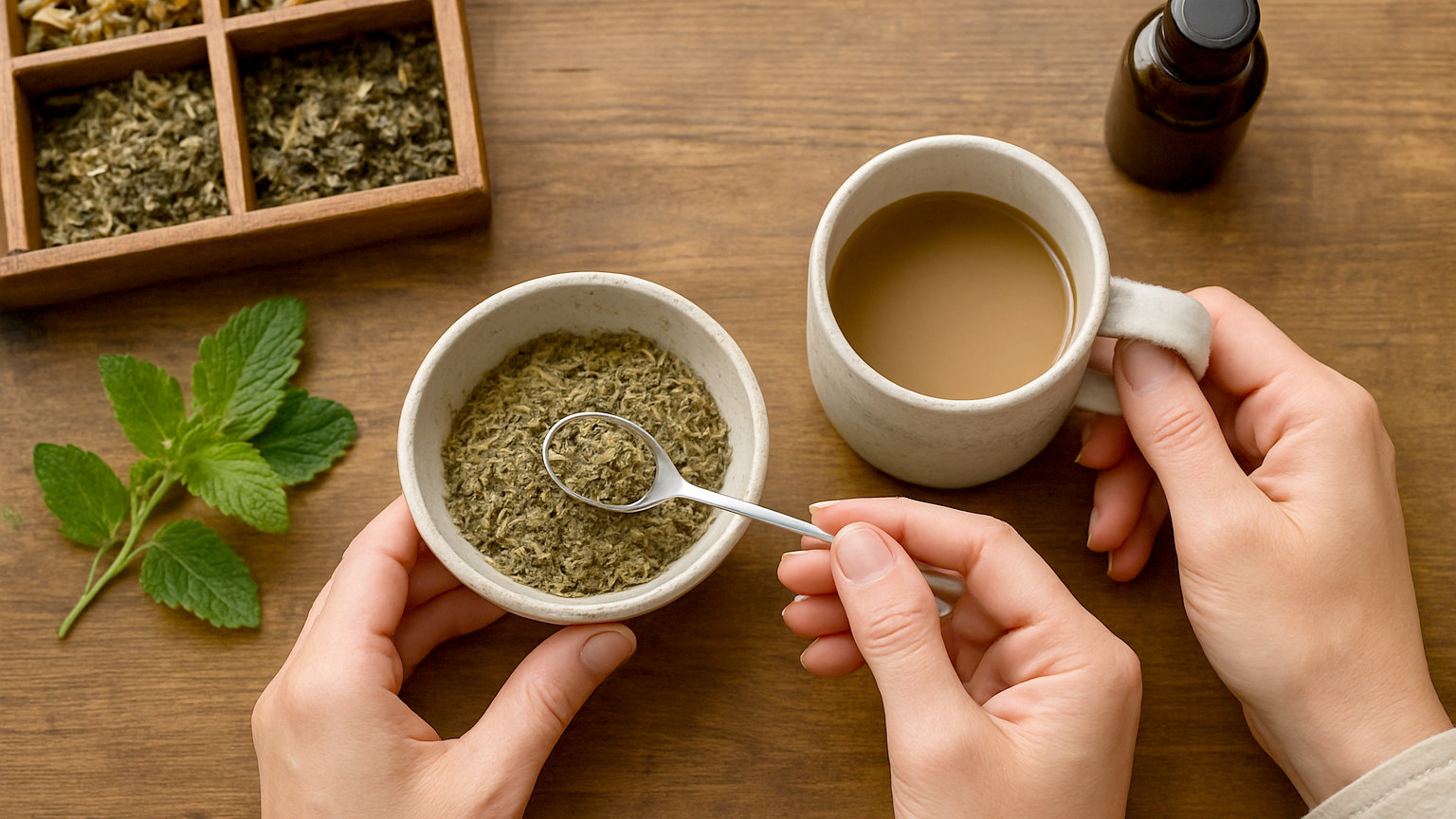
As a tea from fresh or dried leaves, as a tincture, or as standardised extract capsules.
Tea supplies considerably less than a concentrated extract, which matters when comparing to trial doses.
What has better evidence for anxiety?
Cognitive behavioural therapy, available through the NHS with self referral in many areas.
Regular physical activity and reducing caffeine both have measurable effects.
Is it worth trying?
For mild everyday stress it is low risk, pleasant and inexpensive, particularly grown at home.
Anyone with thyroid disease should check first.
What is the summary?
Lemon balm is taken for anxiety, sleep and digestion, has small supporting trials, and carries a thyroid caution most labels omit.
This article is general information and not medical advice.
What should you check on a label?
The botanical name, whether it is dried leaf or standardised extract, and the extraction ratio.
Lemon balm in a combination sleep product is usually one of several sedating ingredients.
What does it illustrate?
That a herb with a mild reputation can still carry a specific caution, in this case for thyroid function.
Gentleness in flavour does not imply pharmacological inertness.
Can you grow it?
Lemon balm grows readily in British gardens and spreads enthusiastically, which makes fresh leaves easy to obtain.
Fresh leaf tea costs nothing and is the traditional preparation.
That is a reasonable way to try it.
What should you expect?
A mild calming effect, based on small trials, rather than treatment for an anxiety disorder.
Anything persistent deserves a GP appointment.
Support for anxiety is available and effective.
What about cold sores?
Topical lemon balm preparations have small trials reporting reduced healing time for cold sores.
Licensed antiviral creams are available from pharmacies and are better established.
A pharmacist can advise on those.
Topical and oral use are separate questions here.
What is the honest position?
A pleasant, low risk herb with small supporting trials and one caution most people never hear about.
Growing it yourself is the cheapest way to try it.
Anything persistent needs proper assessment.
What should you check first?
Whether you have a thyroid condition or take levothyroxine, since that is the caution most easily missed.
Everything else about lemon balm is fairly straightforward.
It remains among the gentler herbs in common use.
Its pleasant taste is a genuine advantage over the alternatives.